Is Installing a TV Cabinet Worth It
Shall we install a TV cabinet? After all, every household's layout and space requirements are unique, and for some, relying on smartphones for watching television has become a habit, making them question the necessity of a TV cabinet. On the other hand, for families with significant storage needs, the organizational benefits offered by a TV cabinet are simply remarkable. If you still hesitate to install a TV cabinet, you can read on to make up your mind.
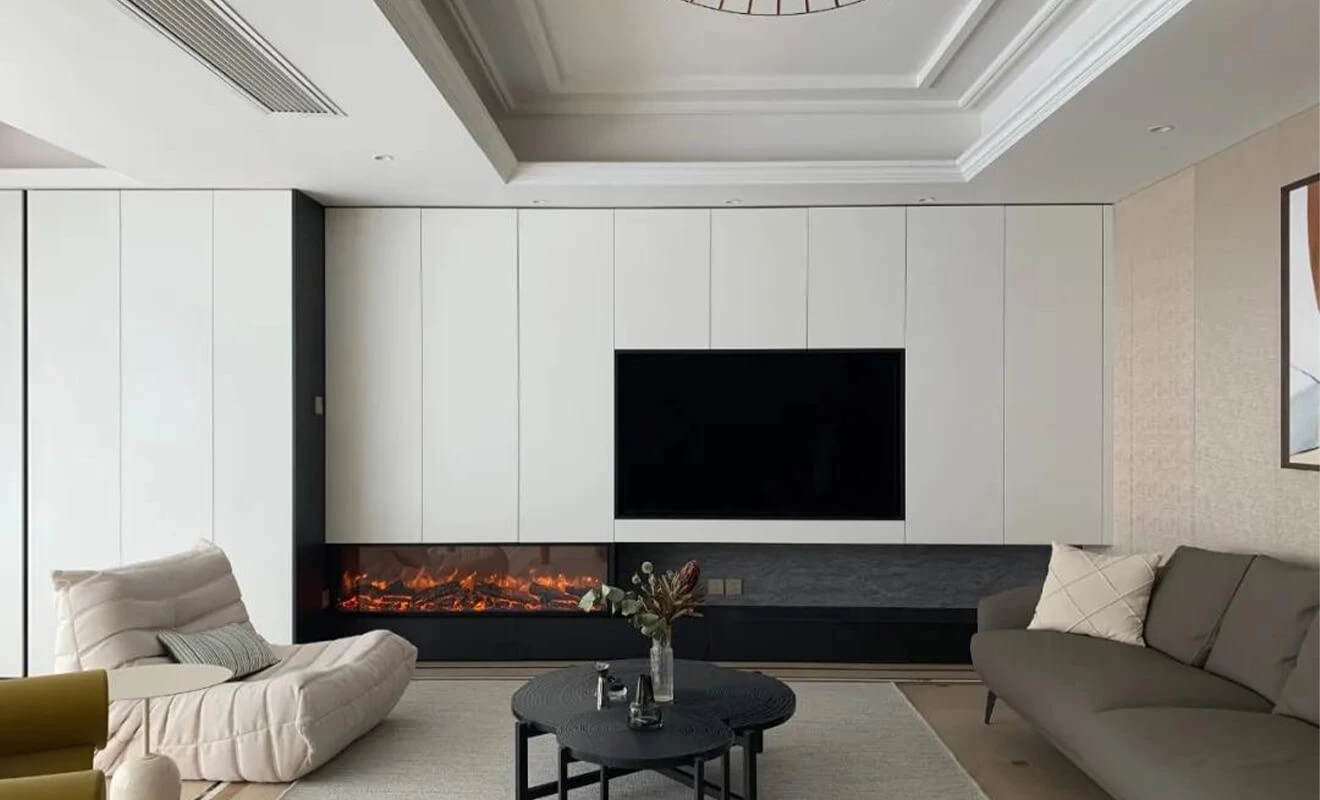
TV cabinet ideas should begin with the living room's actual needs: television size, viewing position, equipment, cables, storage inventory, wall condition, and cleaning routine. A cabinet can make a room feel more complete, but it is not always necessary. The best solution may be a simple low unit, a floating shelf, a full media wall, or no cabinet at all when storage and equipment needs are minimal.
Quick Comparison of TV Cabinet Ideas
| TV Cabinet Type | Main Benefit | Best-Suited Use | Planning Priority |
|---|---|---|---|
| Floor-standing | Simple, grounded storage and display | Traditional living rooms and easy-access storage | Depth, cable openings, and floor cleaning |
| Wall-mounted full cabinet | Maximum storage and a unified wall | Homes needing concealed storage | Wall support, ventilation, and panel layout |
| Floating cabinet | Light visual effect and easy floor cleaning | Modern, compact living rooms | Mounting system, loading, and cable routes |
| Modular cabinet | Mixes books, display, and closed storage | Multi-use rooms, studies, and family living areas | Storage zoning and visual balance |
| Shelf-style cabinet | Open display with lighter storage | Smaller rooms and decorative collections | Dust, cable concealment, and item curation |
| Built-in cabinet | Uses recesses and wall depth efficiently | Renovations with suitable wall conditions | Wall construction, access, and installation sequence |
The strongest TV cabinet ideas keep daily use simple: the television should be comfortable to watch, equipment should have ventilation and service access, cables should be manageable, and storage should reflect the items the household actually owns.
Advantages of a TV cabinet
Generally, a TV cabinet serves multiple purposes such as storage, decoration, and hiding cables. Especially for small living spaces, it can be designed according to the available space, promoting efficient use of the area.
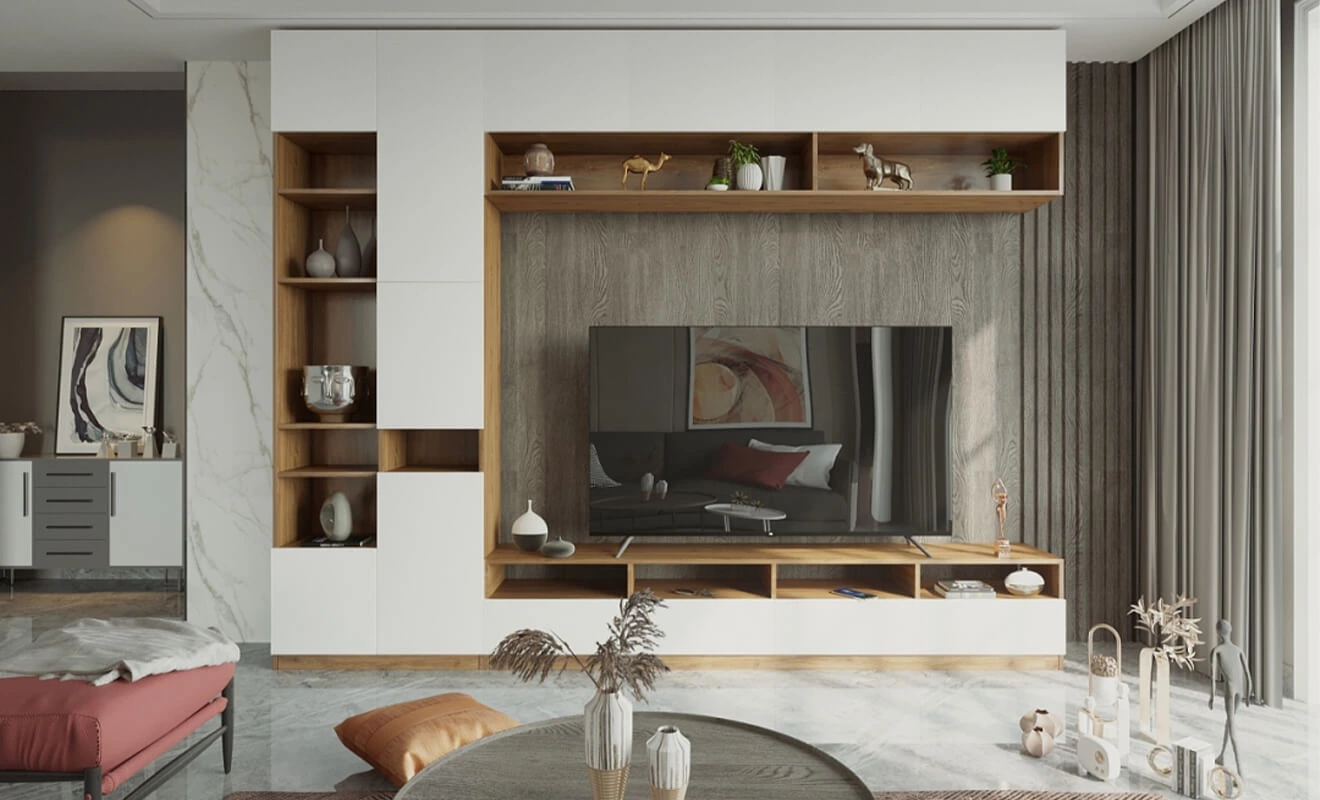
Unless you can achieve an empty living room effect, over time, belongings will accumulate, and the entire living room will appear more cluttered. Therefore, installing a TV cabinet is indeed necessary.
When a TV Cabinet Is Worth It
A TV cabinet is especially useful when the living room needs to store media equipment, books, toys, games, routers, chargers, documents, or display objects. It can also create a clear focal wall when the television would otherwise feel disconnected from the furniture around it. If the room has very little equipment and storage is already available elsewhere, a smaller floating unit or a carefully planned wall mount may be enough.
Types of TV cabinets
Floor-standing TV cabinet: This type of TV cabinet has a shape similar to a floor-standing cabinet. Its greatest advantage is that it fits tightly against the wall and the floor, leaving no dead corners. This type of cabinet doesn't take up much space in the living room and can serve as a decent decorative element. It is commonly seen in home interiors. Depending on the material used, floor-standing TV cabinets can be categorized into two types: wood and stone, each creating a different design style in the house.
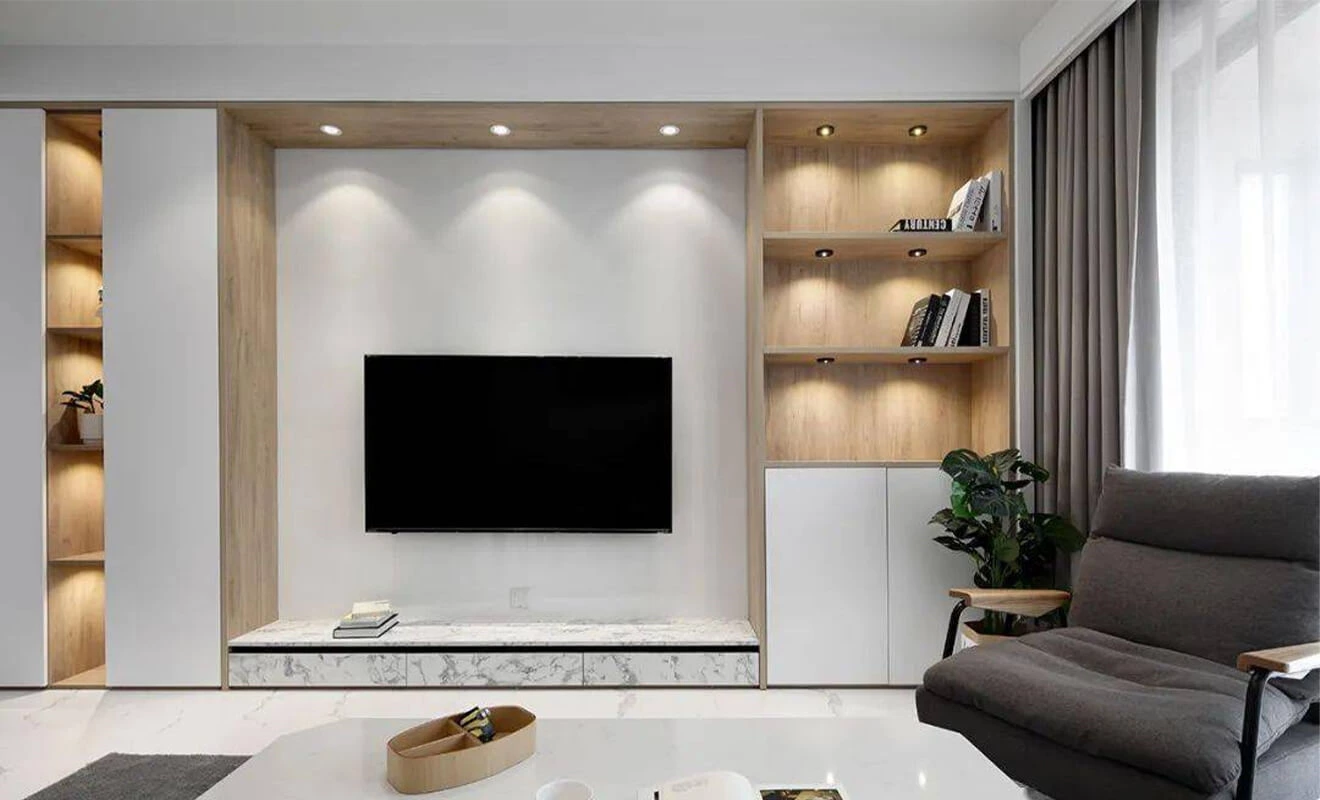
Wood: Wood TV cabinets are made of solid wood, showcasing the warm feeling unique to wood while providing storage capabilities. The cabinet can be designed in various shapes, making it more practical.
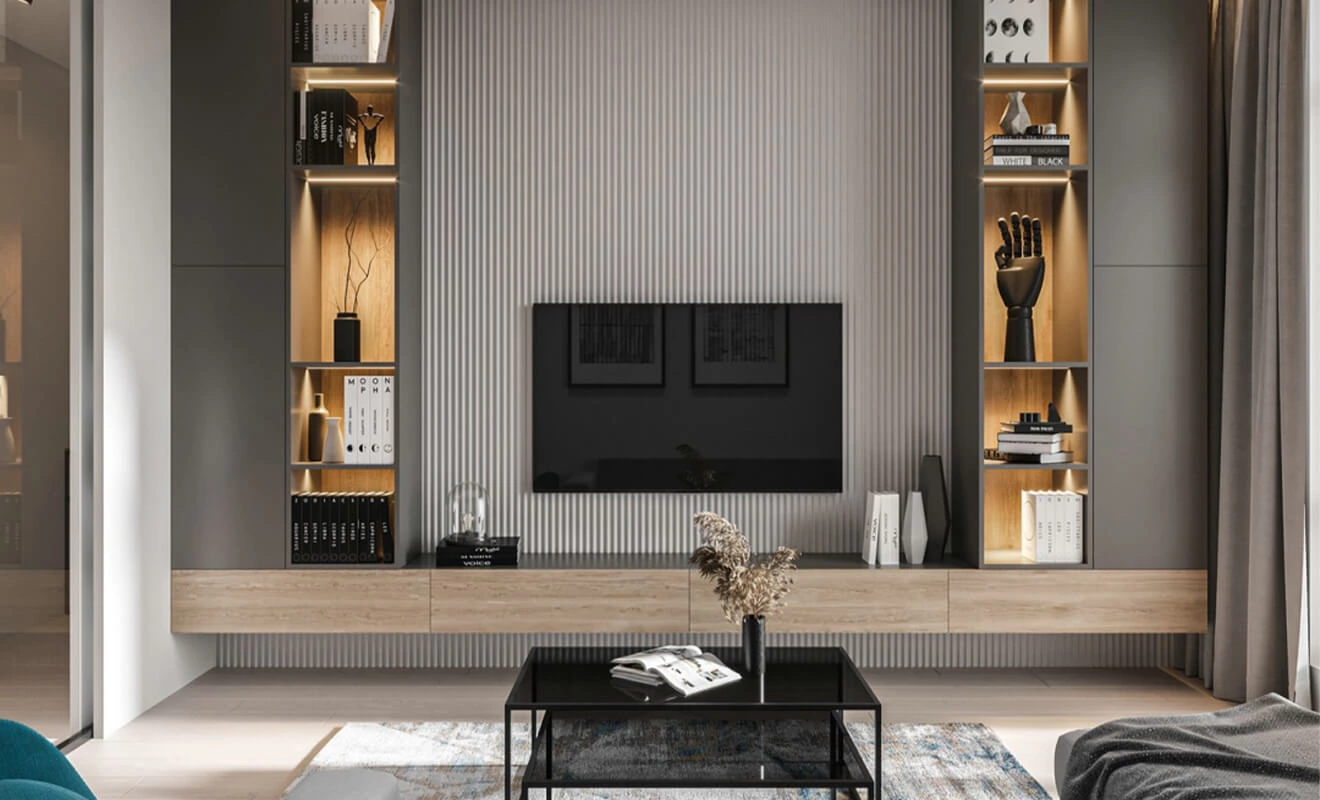
Stone: Stone TV cabinets are made of materials such as slate, quartz, or marble, creating a high-end decorative look with a sense of quality. However, their storage effectiveness is relatively lower compared to wood cabinets.
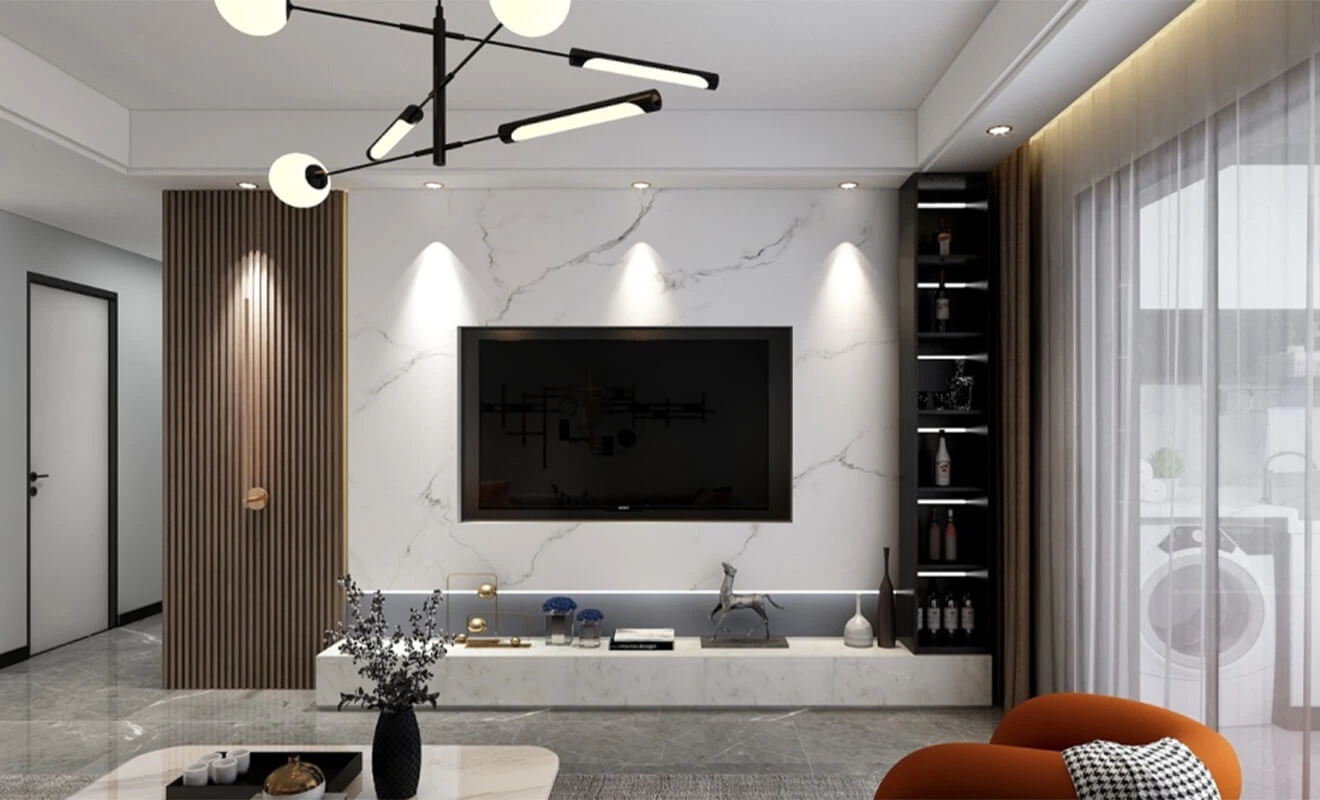
Wall-mounted TV cabinet: A wall-mounted TV cabinet is a custom-made option where the entire wall is transformed into a TV cabinet, creating a consistent style with the rest of the living room. The cabinet doors can be designed without handles, achieving a visually clean and minimalistic effect. By utilizing the entire wall as a TV cabinet, it maximizes the storage capacity. For small living spaces, it can become one of the primary storage areas, combining aesthetics and functionality.
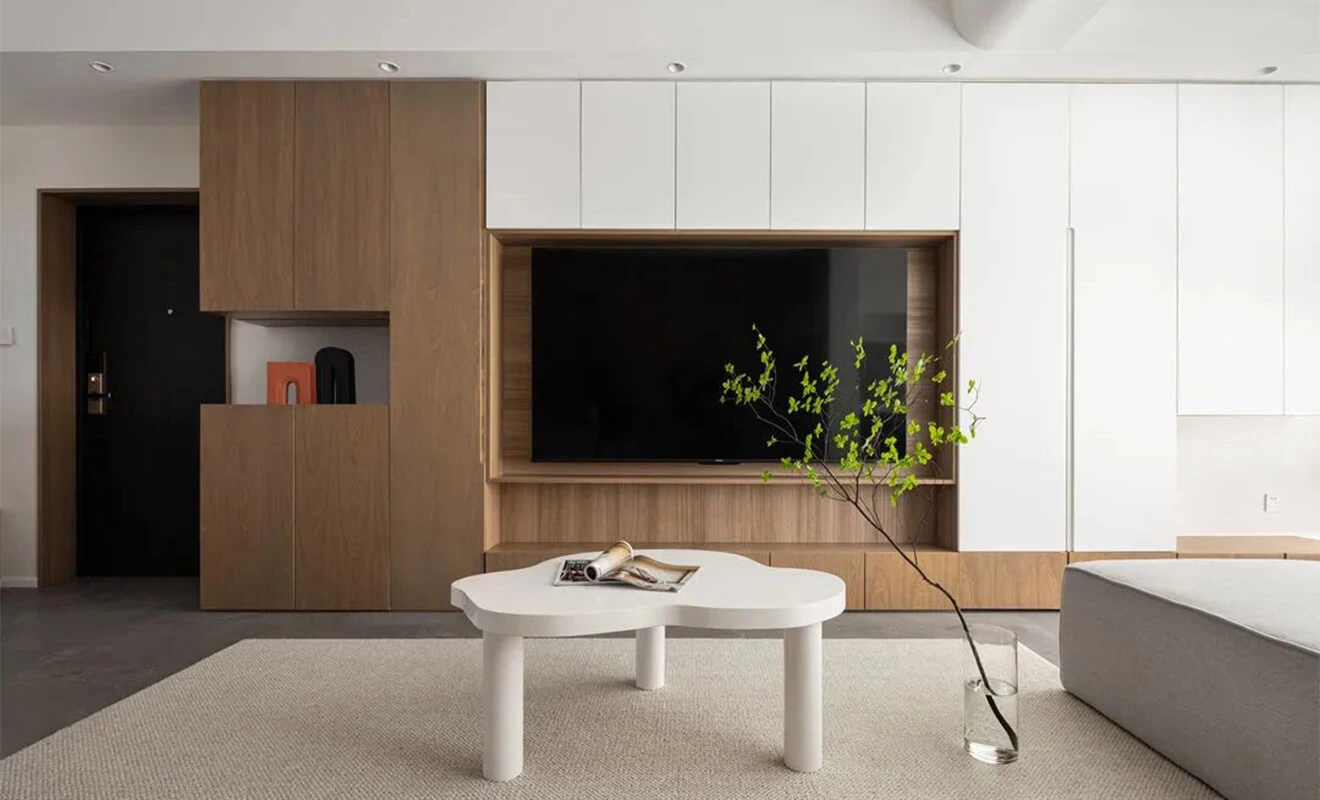
Floating TV cabinet: A floating TV cabinet emphasizes the "floating" aspect, showcasing a sense of sophistication and modernity in the living room. The suspended cabinet design ensures that no dead corners are formed on the floor, allowing for easy cleaning by robotic vacuum cleaners. Additionally, storage can be utilized beneath the cabinet. Matching the floating cabinet, the TV can also be mounted on the wall, enhancing the overall style of the background wall.
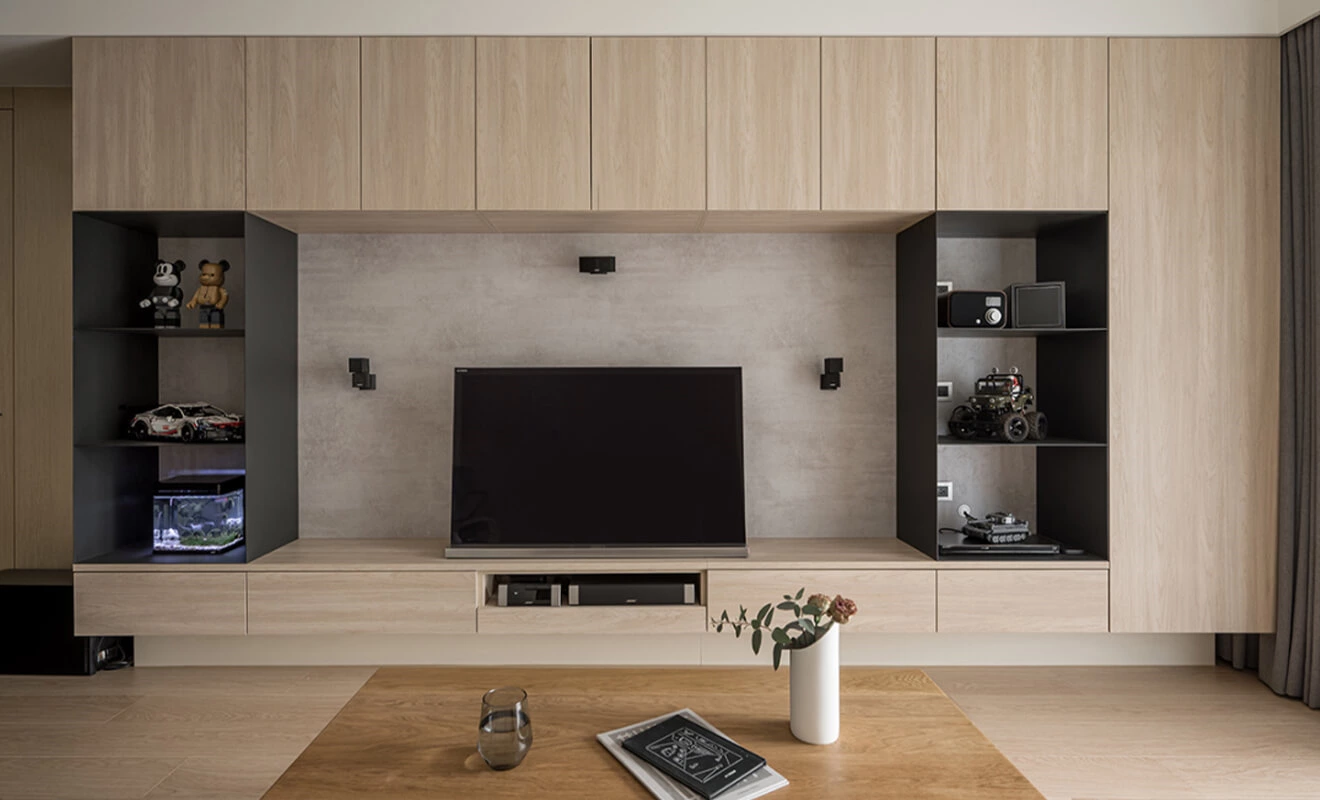
Modular TV cabinet: A modular TV cabinet is an upgraded version of the floor-standing cabinet. It can be combined with bookshelves, display cabinets, and floor-standing cabinets to create a multi-functional storage unit. It satisfies different needs such as watching movies, reading, and working, as if creating an extra room in the house. The design incorporates partitioning to effectively avoid clutter between the TV and other items.
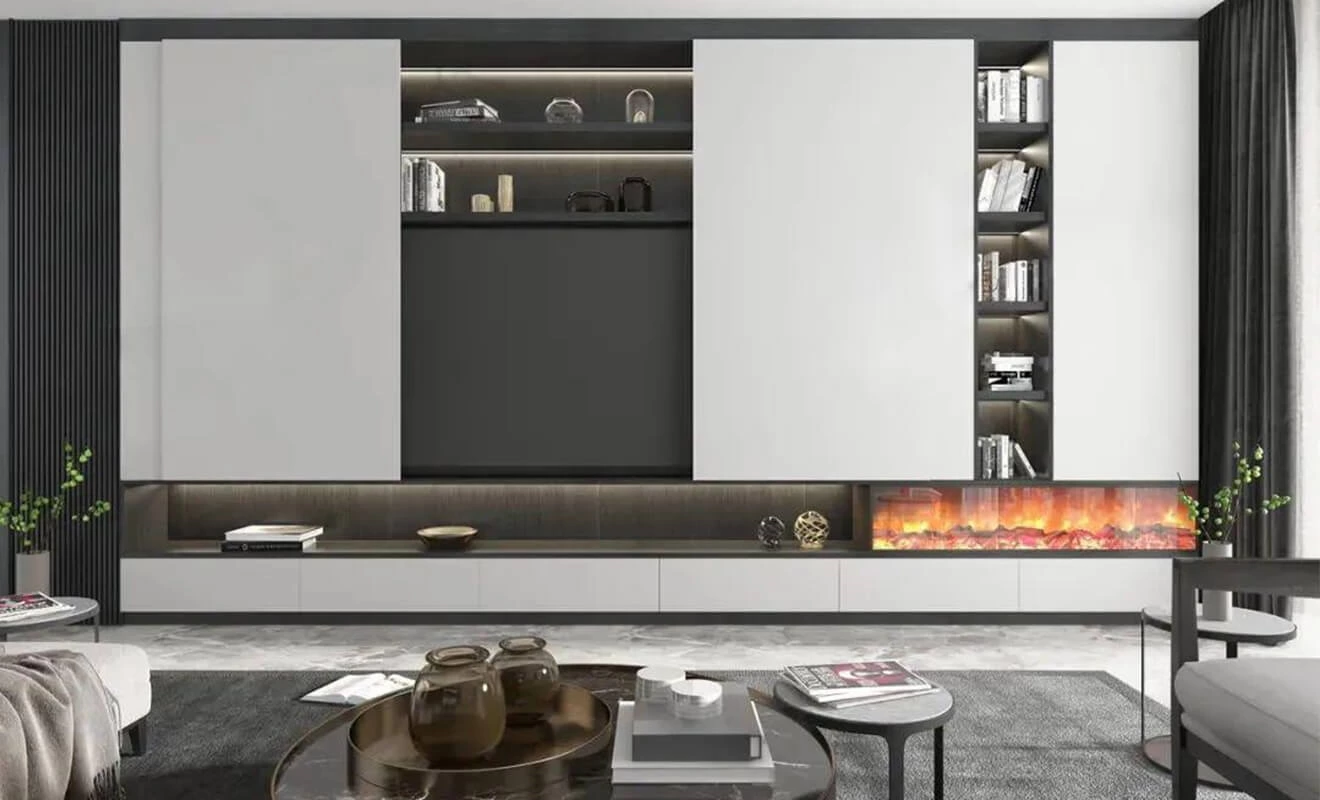
Shelf-style TV cabinet: The shelf-style TV cabinet is somewhat similar to the modular TV cabinet but uses a shelf-style design. It offers both practicality and decoration, often incorporating the concept of dividing panels. If space is limited at home, choosing a shelf-style design can provide storage space while maintaining a minimalist decorative feel.
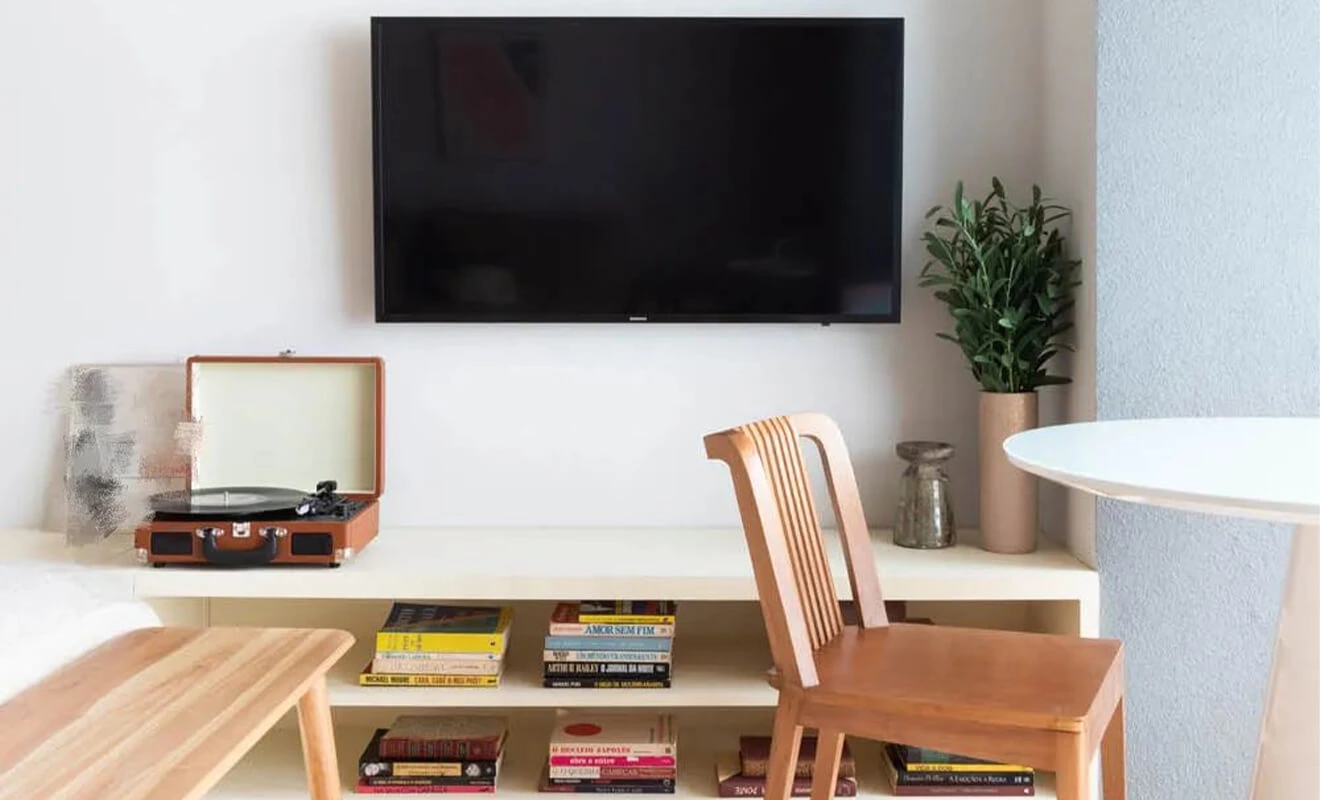
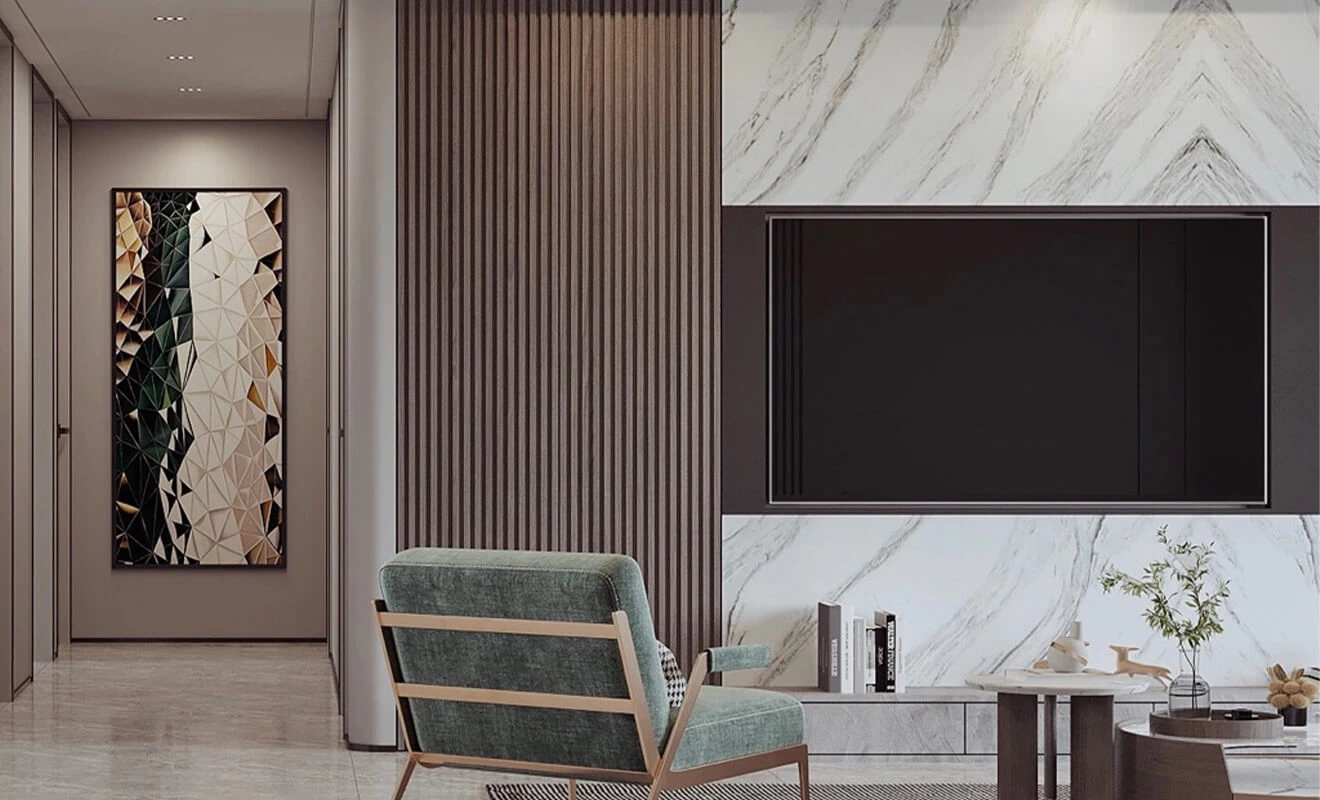
Built-in TV cabinet: The most distinctive feature of a built-in TV cabinet is its space-saving design. It utilizes the gaps between walls, embedding the TV cabinet within the wall itself. This ensures the integrity of the wall while providing ample storage space.
Plan the TV, Equipment, and Cables Before Production
Measure the television model, mounting pattern, soundbar, speakers, game consoles, media boxes, router, and future devices before confirming cabinet dimensions. The TV cabinet should provide a practical cable route, power and data access, ventilation around heat-producing equipment, and a way to reach connections after installation. Do not permanently seal equipment into a cabinet without a service strategy.
- Viewing layout: Position the screen around the main seating arrangement and avoid glare from windows or strong lights.
- Ventilation: Allow airflow and access around media equipment, lighting drivers, and routers.
- Cable management: Plan openings, conduits, and removable panels so wires can be changed later.
- Storage zoning: Separate items that should be hidden from books, art, and objects that deserve display.
- Door and drawer clearance: Check handles, hinges, drawers, nearby doors, and circulation before approving the elevation.
- Cleaning: Decide whether the design needs floor clearance for a robot vacuum or a fully sealed floor-standing base.
For media walls that integrate doors, wall panels, or other architectural details, coordinate the layout with door panel and wall panel options instead of designing the television zone separately from the surrounding room.
TV Cabinet Storage and Hardware
Storage should follow a real inventory. Closed cabinets suit cables, games, papers and visual clutter; open shelves work for books, artwork and selected collections; drawers make small accessories easy to find. A mix of both usually gives a living room a more balanced result than an entirely open or entirely closed wall.
Wide drawers, lift-up doors, and handleless fronts need suitable hardware, loading, and adjustment. Review cabinet hardware and functional accessories with the final cabinet layout. For bookcases, wine storage, laundry units, entry cabinets, and related living-room systems, explore custom cabinets for living rooms and other spaces.
For whole-home projects, TV cabinet ideas should also connect with the home's wider storage planning and a coordinated whole-home customization solution. This prevents the living-room wall from becoming an isolated design decision.
TV Cabinet Safety and Installation
Televisions and tall cabinets require appropriate mounting or anchoring to the wall and suitable structural support. The U.S. Consumer Product Safety Commission's Anchor It! guidance provides safety information for furniture and television tip-over prevention. Follow the manufacturer's instructions and use qualified local professionals to confirm mounting, anchoring, and wall conditions for the actual project.
For accessible or mobility-focused projects, consider reach, clear approach space, handle operation, and how the cabinet is used from a seated or standing position. The U.S. Access Board guidance on operable parts offers general reference material; local requirements and the user's needs determine the final design.
TV Cabinet Planning Checklist
- Measure the wall, finished floor level, ceiling, corners, and adjacent doors or windows.
- Record television, soundbar, speakers, consoles, router, and other equipment dimensions.
- Confirm viewing position, mounting height, glare control, and cable routes.
- List items for closed storage, open display, and frequently accessed drawers.
- Choose floor-standing, floating, modular, shelf-style, or built-in construction.
- Check wall support, anchoring, ventilation, and service access before installation.
- Coordinate finishes with wall panels, doors, flooring, lighting, and other living-room furniture.
- Review hardware load, door clearances, cleaning access, and final elevation drawings.
TV Cabinet Ideas FAQ
1. Is a TV cabinet worth it?
A TV cabinet is worth it when it improves storage, cable management, equipment access, or the overall living-room composition. If storage and equipment needs are minimal, a simpler wall-mounted solution may be more appropriate.
2. What type of TV cabinet is best for a small living room?
A floating, shallow modular or carefully planned floor-standing unit can work well in a small room. The main goal is to preserve walking space while providing only the storage that is truly needed.
3. Can a TV cabinet hide cables?
Yes. Plan cable openings, conduits, removable panels, power points, and data access before the cabinet is built. Hidden cables should still be reachable for replacement or service.
4. Does a TV cabinet need ventilation?
It may, particularly when it encloses consoles, routers, media boxes, amplifiers, or lighting drivers. Check the equipment requirements and provide suitable airflow and access.
5. What is a floating TV cabinet?
A floating TV cabinet is mounted above the floor to create a lighter visual effect and allow easier floor cleaning below. It needs a suitable mounting system and wall support.
6. Can a TV cabinet include bookshelves?
Yes. Modular TV cabinets often combine closed storage, open shelves, display zones, and bookcases. Define what should be displayed and what should be hidden before setting the proportions.
7. Should the TV be mounted on the wall?
Wall mounting can create a clean media wall and free the cabinet surface, but the choice depends on viewing height, wall structure, cable access, and the television manufacturer's instructions.
8. How deep should a TV cabinet be?
Depth should follow the items stored, equipment ventilation, cable access, and circulation in front of the cabinet. Do not choose depth only by appearance; measure the actual equipment and room.
9. Can a TV cabinet be used as a room divider?
In some open-plan spaces, a double-sided or carefully designed cabinet can define zones. Structural support, cable routes, sightlines, and access from both sides need to be planned early.
10. What materials work for TV cabinets?
Wood, engineered panels, stone accents, metal, and glass can all be used. Select materials based on the desired style, structural needs, maintenance, equipment heat, and the surrounding interior finishes.
11. How do I prevent a TV cabinet from looking cluttered?
Use closed storage for cables and miscellaneous items, leave open shelves for a limited display selection, and plan equipment zones with service access. A clear inventory is more effective than adding shelves everywhere.
12. What should I approve before a custom TV cabinet is made?
Approve wall dimensions, equipment schedule, television mounting, storage layout, materials, finishes, hardware, cables, outlets, ventilation, wall support, and installation details.
Conclusion: Choose a TV Cabinet for Function, Not Just Decoration
The best TV cabinet ideas make the living room easier to use by organizing storage, cables, equipment, and visual focus. Floor-standing, floating, modular, shelf-style, and built-in solutions each work when their dimensions and installation details match the room.
Start with the television, equipment, and storage inventory, then coordinate the cabinet with the wall, hardware, finishes, and safety requirements. A well-planned custom TV cabinet can remain useful long after the television or living-room layout changes.