Kitchen cabinet storage solutions do more than increase capacity. When drawers, pantry units, appliance zones, wall cabinets, and islands are planned around daily routines, they can reduce countertop clutter and make cooking, serving, and cleaning easier.
From meal preparation to gatherings, the kitchen stands as an important spot at home and serves multiple purposes. Under these circumstances, keeping everything in your kitchen effectively organized will save many headaches and stressful moments.
We’ve collected some ideas below that can be worked right into just about any kitchen design in customization or remodel. Once we have worked with you to design the kitchen of your dreams, we will complete your ideal kitchen so you can joyfully cook and eat with your loved ones.
Whether you are renovating one room or planning custom kitchen cabinets for a new home, start by identifying what needs to be stored, where it is used, and how often it is accessed. That approach helps turn kitchen cabinet storage solutions into a useful part of the layout rather than an afterthought.
How to Plan Kitchen Cabinet Storage Solutions
A well-organized kitchen places frequently used cookware, utensils, food items, and appliances close to their working zones. For example, pans and cooking tools belong near the cooktop, dishes work well near the dishwasher or dining area, and dry goods are easier to manage in a tall pantry with clear internal zones.
Before choosing accessories, review the cabinet width, depth, opening direction, appliance dimensions, and countertop workflow. The best solution is not always the one with the most hardware; it is the one that gives each item a practical and easy-to-reach position.
Custom Pull-out Drawers
It is often easier to view and access items stored in drawers in the base units, although cabinet trays and pull-outs can help. Full extension drawers give immediate accessibility to all contents, even those at the back of the drawer. Organize your counter space by adding custom cabinetry pull-out drawers, and you can say goodbye to organizing your base cabinets on your hands and knees.
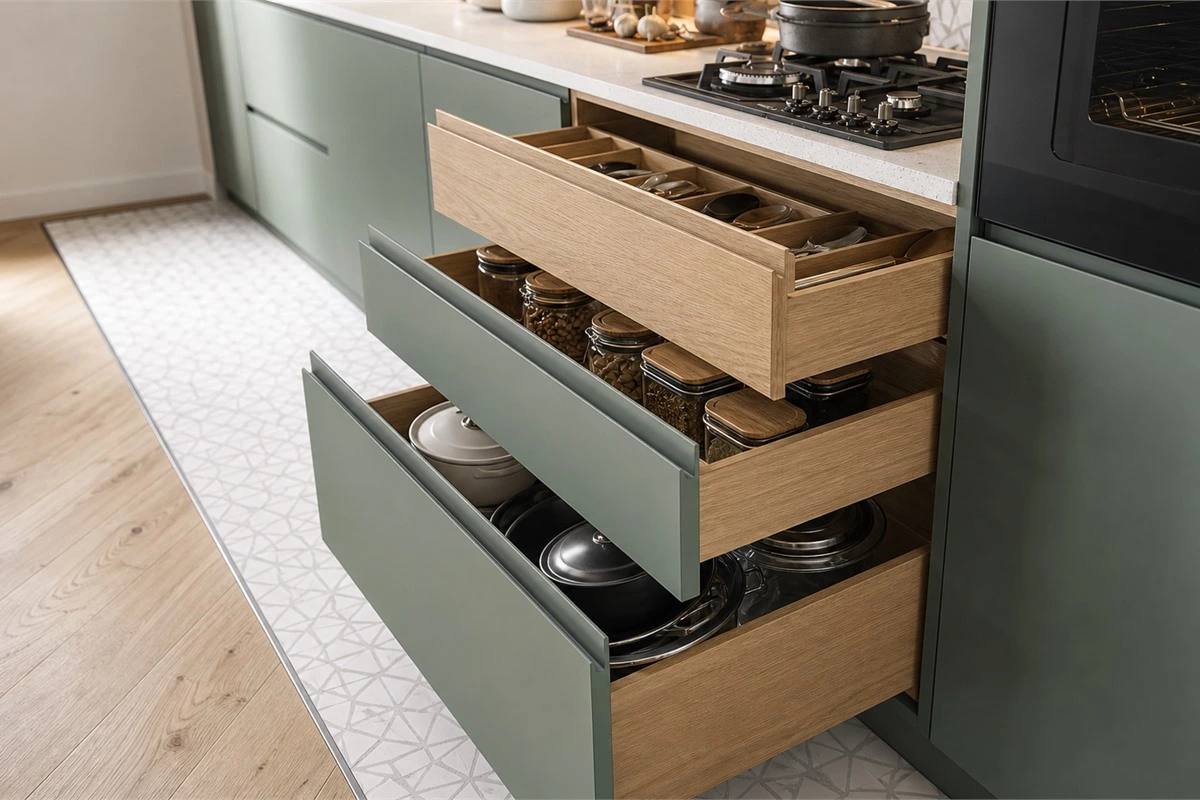
Oversized drawers are often easier to access plates and bowls while offering well-organized stacks in your kitchen.
Deep drawers are especially useful for cookware, dishes, food containers, and small appliances because the entire drawer can be pulled forward for a clear view. To improve everyday use, divide large drawers by category instead of storing unrelated items together.
Custom Drawer Inserts
Adjustable dividers and drawer inserts can offer an effective kitchen organization solution according to the users. Use dividers to separate lids neatly from pots, containers, or pans in the same drawer. Include inserts in drawers for maximized storage of tableware or contained spices.
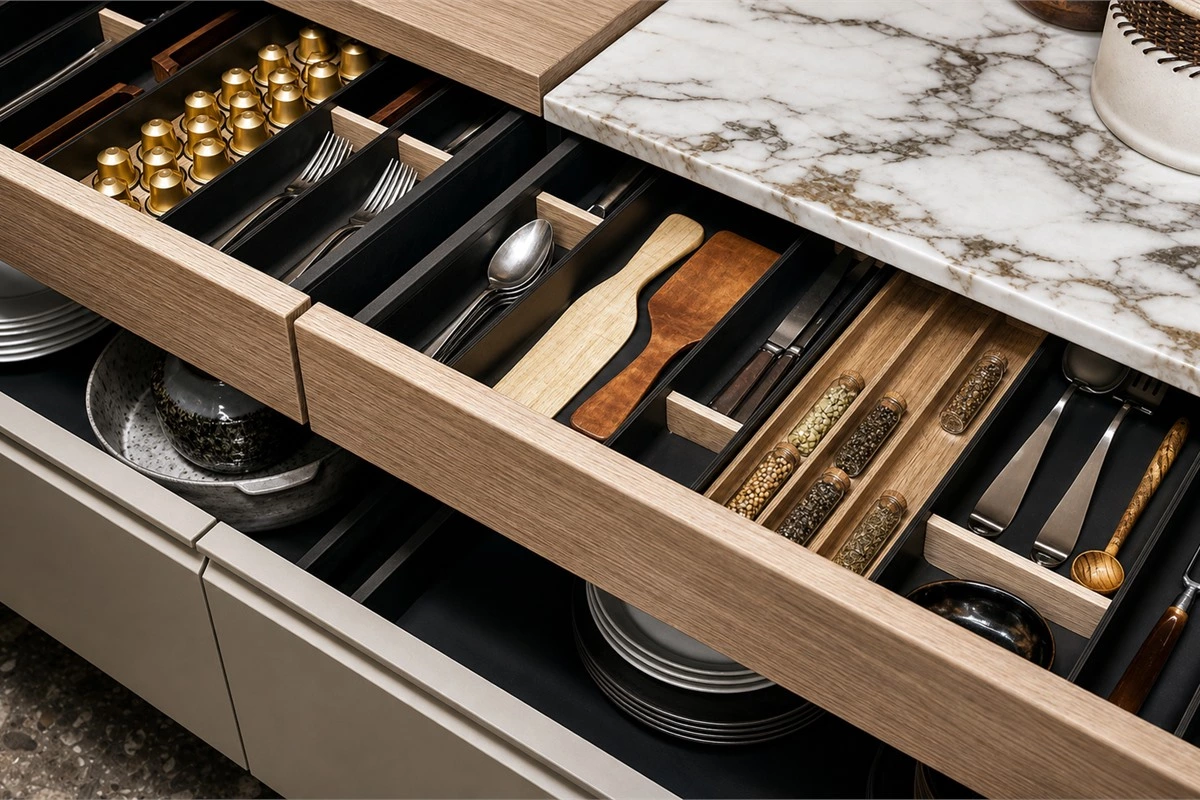
If you have a cooktop, having custom drawers with upright containers lets you store utensils alongside the range, which are ideal for storing cooking oils and spices.
Drawer inserts work best when they are planned for the actual items used in the home. Cutlery trays, knife blocks, spice dividers, plate pegs, vertical tray holders, and adjustable partitions can all be selected according to drawer dimensions. Pairing these systems with suitable cabinet hardware helps drawers remain smooth and stable during frequent use.
Wall Cabinet Lifting Organizers
You can reach things more easily with built-in pull-down shelving or lifting electrical mechanisms, especially in wall cabinets at quite a height. They will hold in place for loading, even when empty, as it stays where you let go when loaded or unloaded.
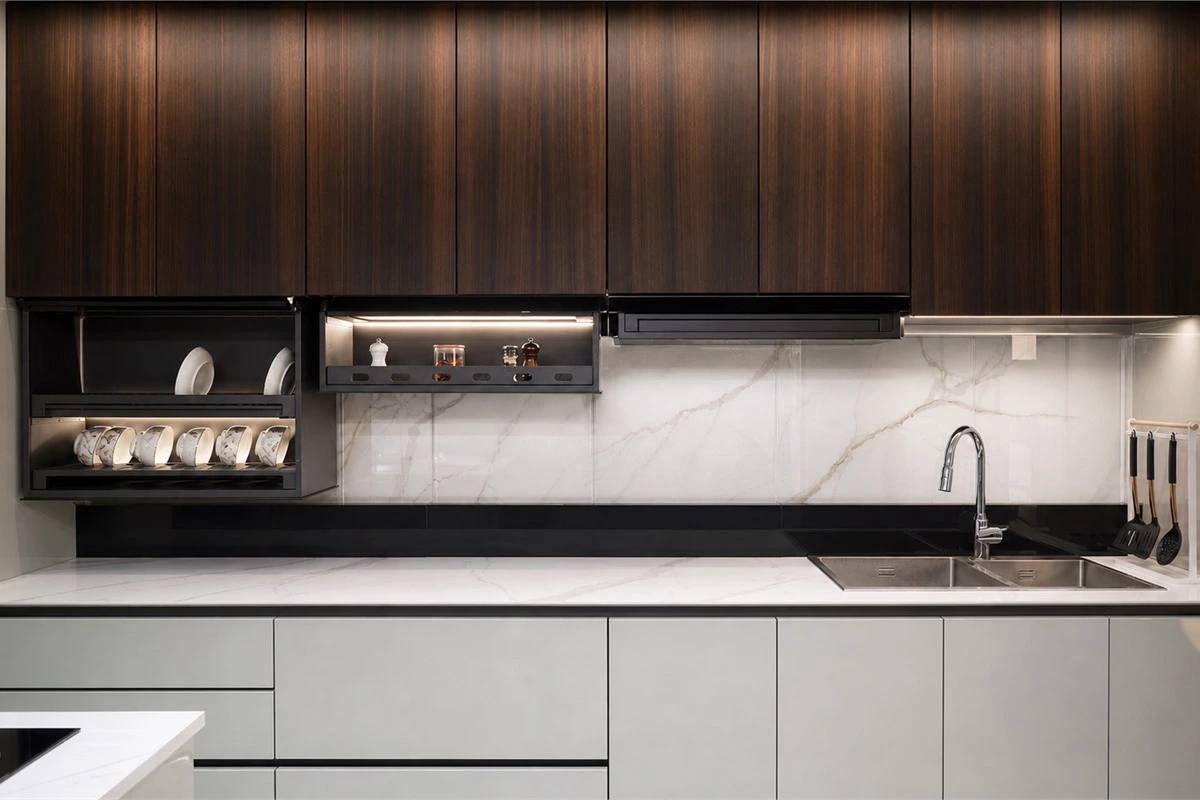
Wall cabinet lifting organizers are particularly helpful where ceiling-height storage is needed, but the upper shelves would otherwise be difficult to reach. They can make upper cabinets more practical without relying on a step stool for everyday items. Confirm the cabinet height, load requirements, and opening clearance before selecting a lift mechanism.
Pull-out Larders
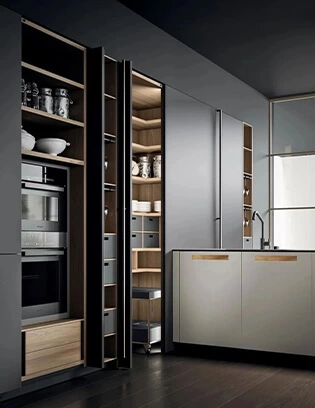
Custom tall larder pull-out organizers can free your tall cabinets or walk-in pantry from clutter and maximize your precious vertical storage space. They are quite suitable for small or medium-sized kitchens.
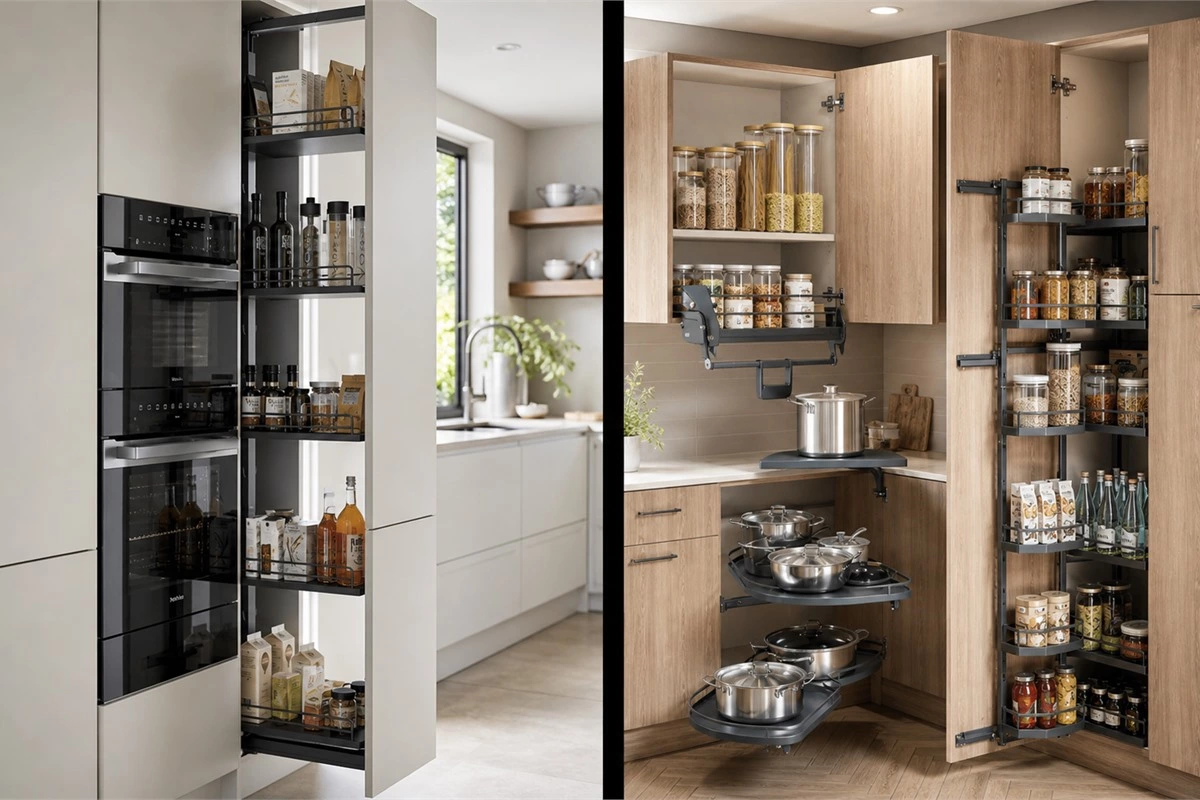
A pull-out larder gives a narrow or tall cabinet a clearer internal structure. Store heavier items near the bottom, everyday dry goods at eye level, and low-frequency items higher up. This zoning makes a pantry easier to maintain and prevents deep shelves from becoming forgotten storage.
Built-in Appliances
It's common sense in kitchen designs to optimise kitchen storage and countertop space for a more organized space. Having appliances like microwaves, dishwashers, and coffee machines built into the cabinets is one of those effective solutions.
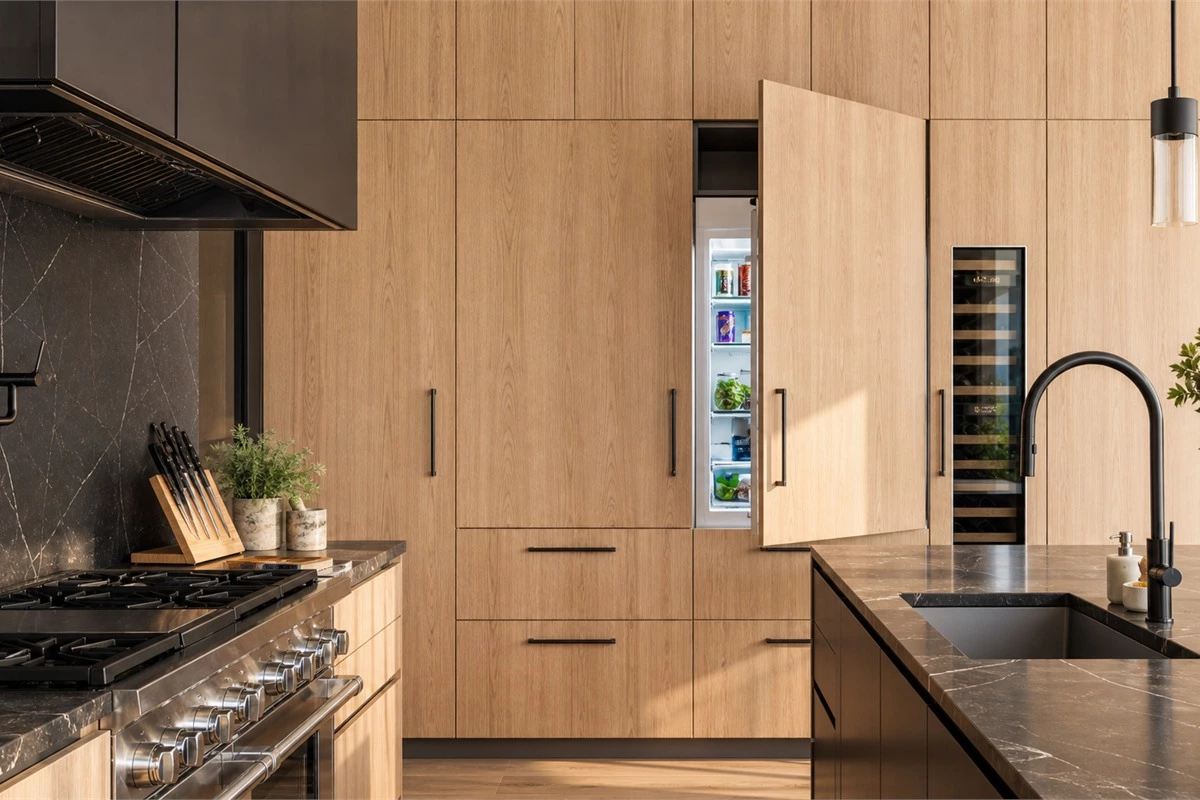
Built-in appliances can make a kitchen look calmer because they reduce visual interruption across the countertop and cabinet elevation. However, cabinetry should be planned around appliance specifications, door opening, ventilation requirements, electrical access, and maintenance clearance. For kitchen appliance planning guidance, homeowners can also review ENERGY STAR product information.
Kitchen Island
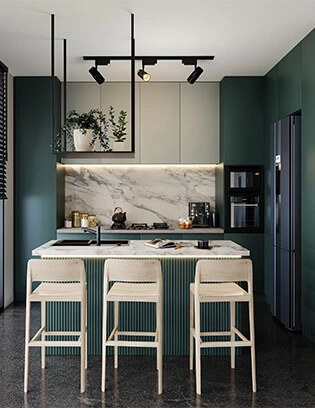
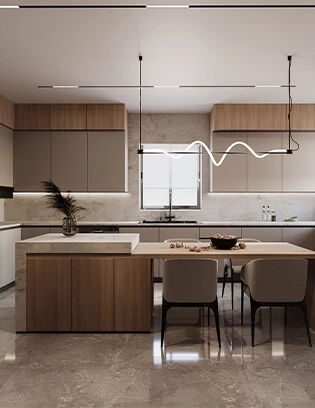
An island is mostly the focal point in the kitchen, with various ways to add storage and worktops for food prep, storage, serving meals, and friendly gatherings. The kitchen island is one of the most hardworking areas of the home, but it can also be one of the most stylish! For example, you can treat it as an entertaining hub with a bar-height countertop and a built-in wine rack, as well as open storage.
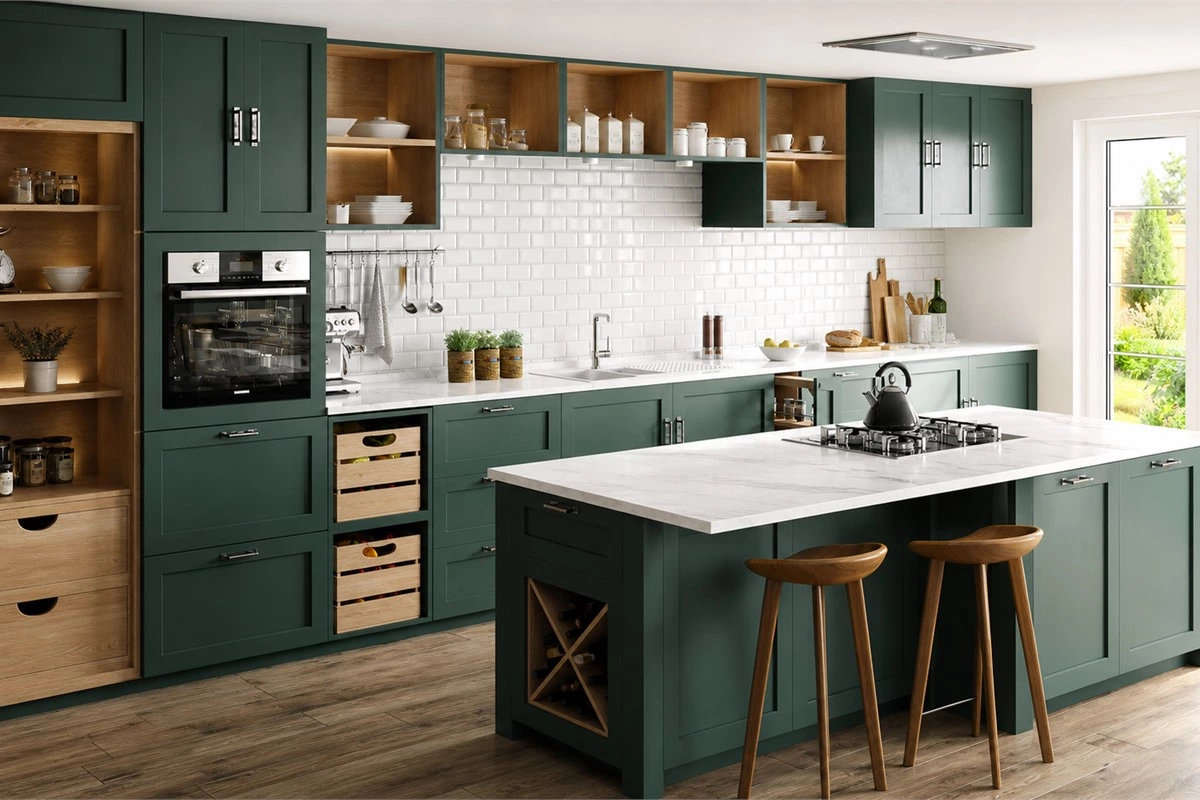
An island can combine drawers, open shelves, wine storage, seating, waste sorting, and food-preparation space in one unit. The key is to preserve circulation around it and avoid filling every side with storage. For more layout options, see these kitchen island functions and layout types.
Custom Pantry
You can pay attention to a pantry if you need more systematic organization in your kitchen. It allows you to really take advantage of the vertical space in your cabinets with full access to the entire storage with excellent visibility. Deep pantry shelves provide a lot of room and quick access to items, and pantry organizers, such as wire racks, baskets, rotating trays, and risers, optimise the storage. Consider which items would be most beneficial to you and which you wish to keep on the shelf. If there is adequate space in the pantry, you can even keep your appliances stored here.
A custom pantry can be configured around food storage, serving ware, baking supplies, cleaning products, and small appliances. Pull-out baskets provide access in narrow cabinets, while adjustable shelves give more flexibility for changing household needs. When space allows, a pantry can also separate appliance storage from the main cooking zone and keep the countertop visually clear.
Choose Storage by Activity, Not by Empty Space
The most effective kitchen cabinet storage solutions follow the daily route through the room. Keep preparation tools near the main worktop, spices and oils near the cooktop, dishes near the dishwasher, and waste sorting close to the sink. This makes movement more efficient and reduces the need to carry items across the kitchen.
For a broader planning reference, the National Kitchen & Bath Association provides useful general kitchen-planning resources. You can also compare cabinet layouts, door finishes, and integrated appliance ideas through ALLURE’s modern kitchen cabinet collection.
Frequently Asked Questions About Kitchen Cabinet Storage Solutions
What are the best kitchen cabinet storage solutions?
Deep drawers, pull-out pantry systems, drawer inserts, lift-down organizers, appliance garages, and island storage are among the most useful options. The best combination depends on the kitchen layout and how the household cooks.
Are drawers better than lower cabinets with shelves?
Drawers often provide easier access because their contents can be pulled fully into view. They are especially useful for pots, pans, dishes, food containers, and small appliances.
How can I organize a deep pantry cabinet?
Use adjustable shelves, pull-out baskets, clear zones for different food categories, and heavier items at the bottom. Eye-level shelves should be reserved for frequently used products.
What should be stored near a cooktop?
Common choices include cooking utensils, oils, spices, pans, lids, cutting boards, and oven-safe dishes. Keep heat-sensitive products and cleaning chemicals away from the cooking zone.
Are pull-out larders suitable for small kitchens?
Yes. Tall pull-out larders can make use of vertical space and offer access from both sides, making them suitable for compact kitchens with limited floor area.
How do wall cabinet lifting organizers work?
They use a pull-down shelf or lifting mechanism to bring upper-cabinet contents to a more accessible height. The correct model depends on cabinet dimensions, expected weight, and opening clearance.
Can a kitchen island add useful storage?
Yes. An island can include drawers, shelves, cabinets, wine storage, bins, and seating. It should be planned with enough surrounding clearance for doors, drawers, and people to move comfortably.
Should small appliances be stored in cabinets?
Frequently used appliances may work best in an appliance garage or a dedicated counter zone, while occasional-use appliances can be stored in a pantry or tall cabinet. Consider power access and ventilation where needed.
How can I keep countertops clear?
Use drawer inserts, pantry zones, pull-outs, and dedicated appliance storage so frequently used items have a fixed home. Avoid using the countertop as permanent storage for items that can be placed inside cabinets.
Are custom kitchen cabinet storage solutions worth planning early?
Yes. Planning storage early allows drawer widths, pantry sizes, appliance positions, and hardware systems to be integrated into the cabinet layout instead of being added after production decisions are already made.
Final Thoughts
Kitchen cabinet storage solutions are most successful when they support real daily habits. Pull-out drawers, inserts, lifting organizers, tall larders, built-in appliances, islands, and custom pantries all serve different roles. By planning them around workflow, accessibility, and the available cabinet space, an organized kitchen can remain practical, calm, and easier to use over time.