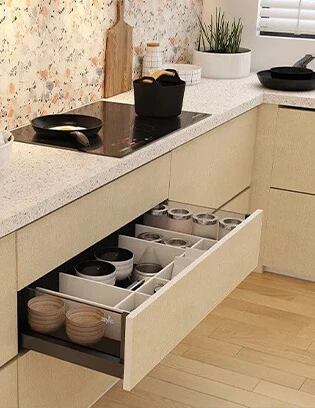
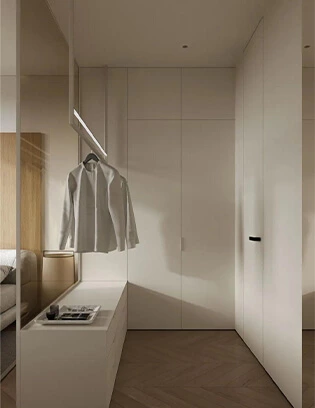
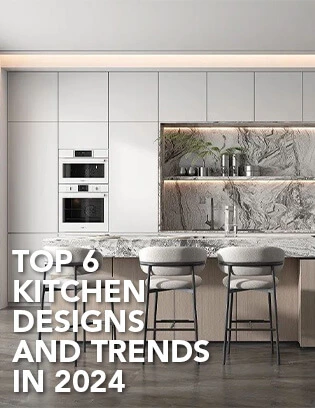
For those who go for simplicity or true minimalist style, physical handles can add too much fuss, while a handleless design may seem the obvious preference. It promises a sleek, streamlined contemporary feel while making flat-front, plain cabinets all of a sudden interesting and less basic. Let's see and get inspired by the handleless designs below.
A well-planned handleless cabinet door opening system does more than create a clean elevation. It affects daily comfort, cleaning, safety, door alignment, and the way light moves across cabinet surfaces. The most successful handleless cabinet designs match the opening method to the cabinet location, panel material, user habits, and overall style of the home.
Before choosing an option, consider where the cabinets will be installed. A kitchen may need an easy-to-grip profile near heavy drawers, while a bedroom wardrobe may benefit from a quieter recessed pull. For broader inspiration, explore our guide to handleless cabinet designs in modern homes.
How to Choose a Handleless Cabinet Door Opening System
There is no single handleless solution that suits every cabinet. Consider the thickness of the door panel, the weight of drawers, the frequency of use, the desired gap between fronts, and whether fingerprints or cleaning will be a concern. A custom cabinet designer can also combine several opening methods in one room—for example, integrated pulls for lower drawers and push-to-open mechanisms for selected upper cabinets.
Good detailing is especially important in minimalist interiors. Even door gaps, aligned profiles, smooth edge finishing, and quality hardware help a handleless cabinet design look intentional rather than plain.
45-degree Bevelled Edge Pull
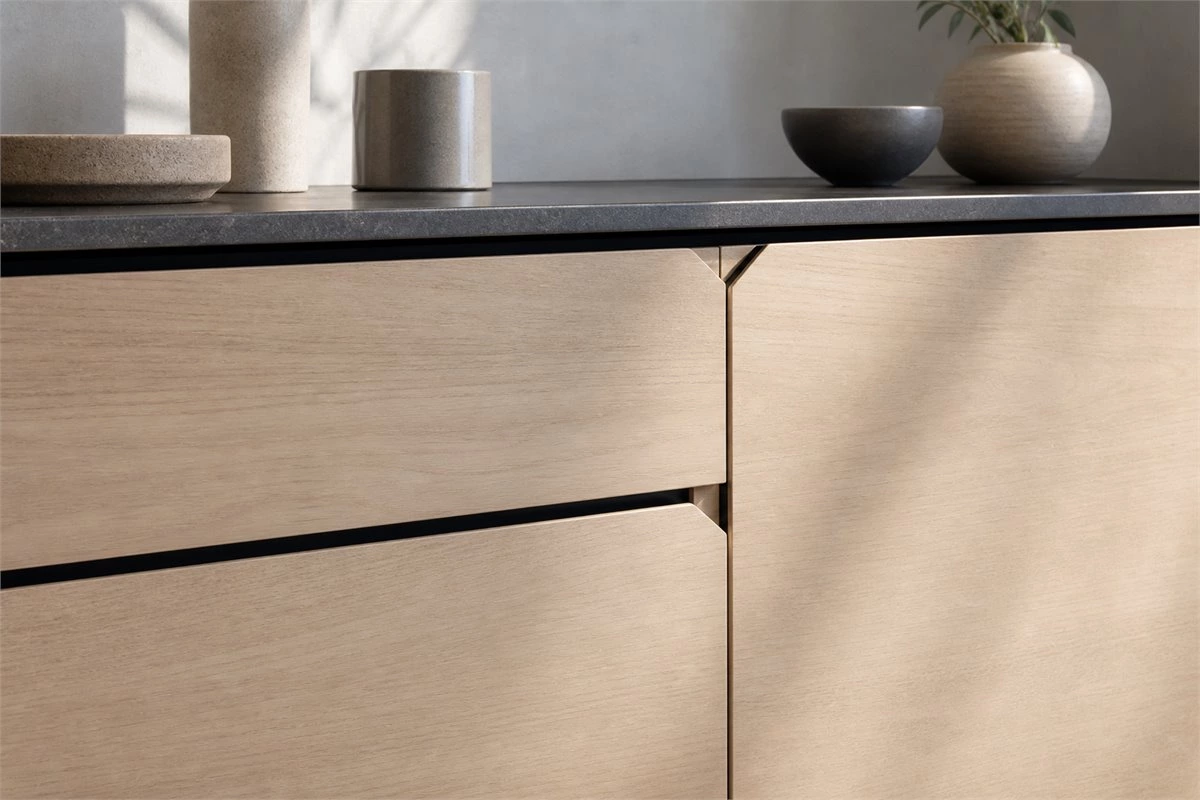
This design has the top edge of the door or drawer panel cut at a 45-degree angle, which allows for easy grabbing to open or close the cabinets. It’s less “decorative” because it’s integrated into the cabinet piece itself, which offers an aesthetic that complements various design styles, from minimalist to transitional. Such pulls also reduce the risk of catching clothing or snagging on objects as compared to traditional handles.
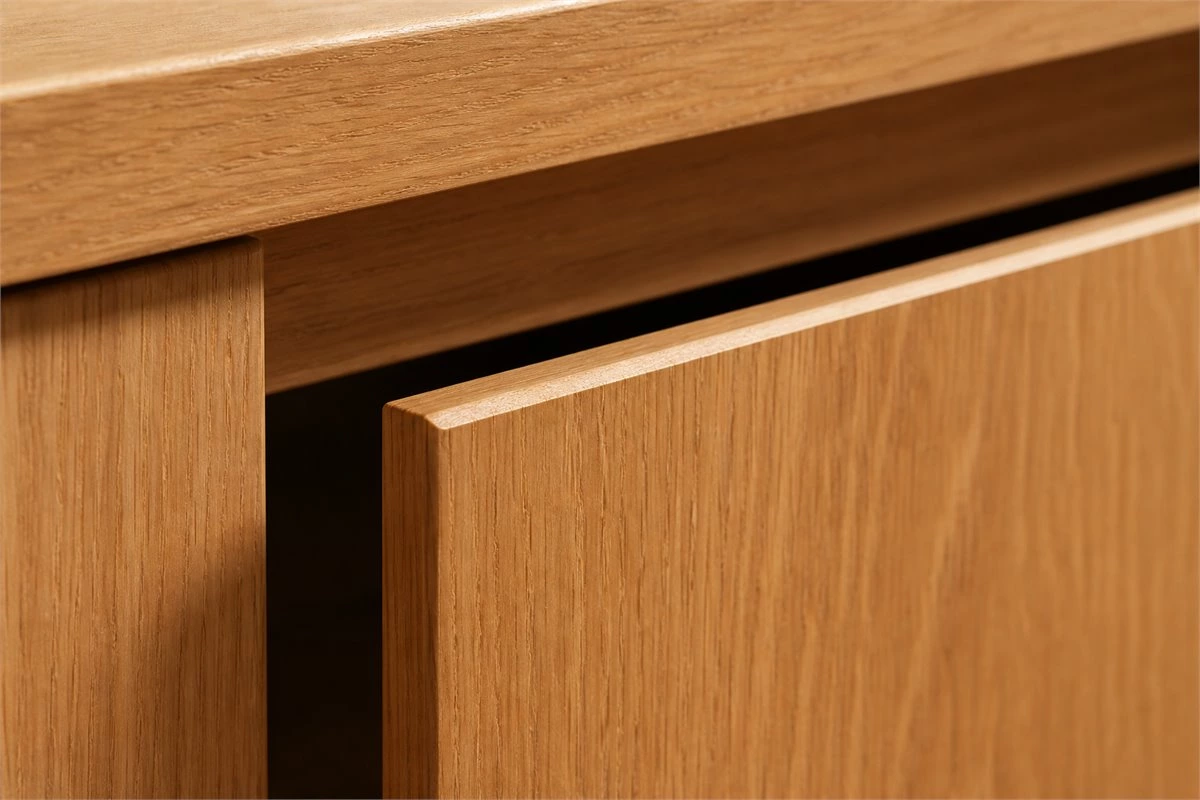
A 45-degree bevelled edge pull is particularly suitable for drawers and base cabinets because the angled edge gives fingers a clear, comfortable grip. It works well with matte lacquer, veneer, PET, and melamine fronts, provided that the panel edge is finished precisely. The profile can be subtle in a monochrome kitchen or emphasized with a contrasting dark reveal.
When using this method on wide drawers, make sure the bevel runs continuously and remains comfortable to use along the full length of the front. This creates a highly integrated look without compromising everyday access.
Extended Edge Pull
Extend the lower end of the door or drawer panel to a certain length and make it easy enough to grab the door or drawer and pull it open. Similar to the bevelled edge pull, such treatment looks the best for serious minimalists as it is so effortlessly minimal yet impactful.
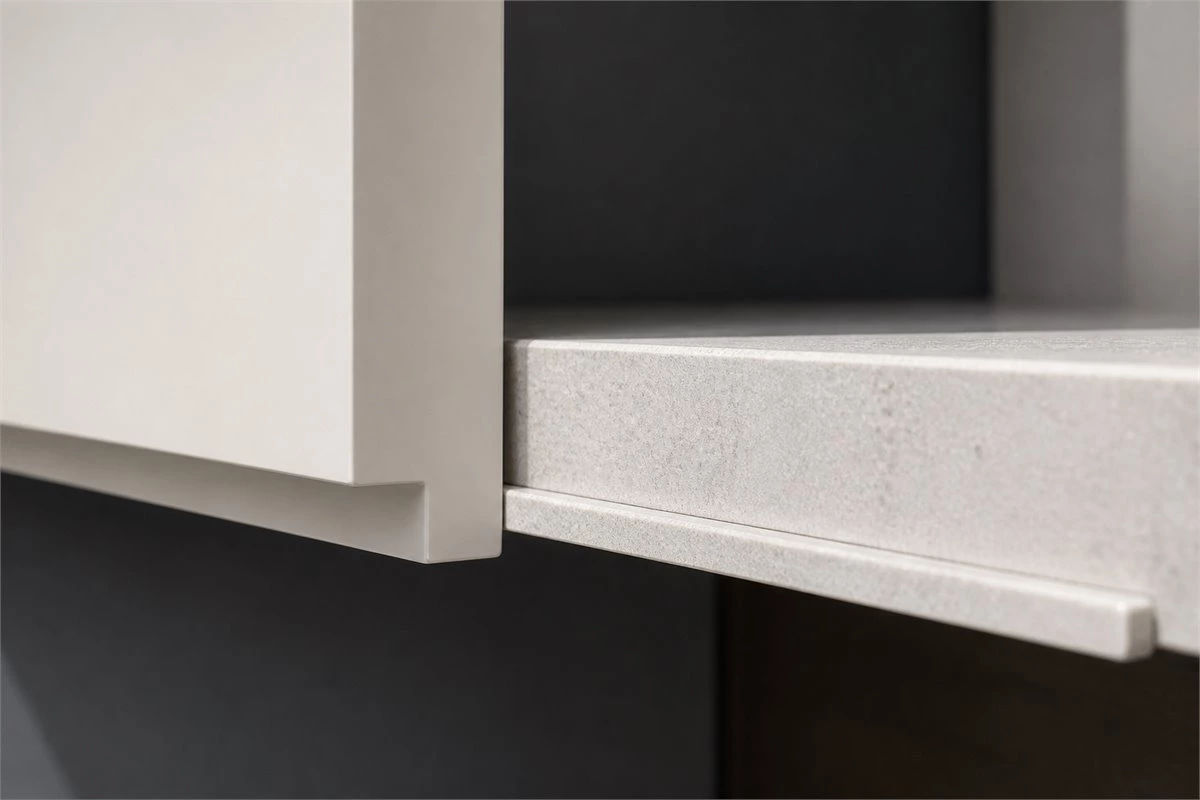
An extended edge pull creates a shadow line below a cabinet front, making it easy to open while preserving a flush visual effect. It is commonly used on upper cabinets, tall units, and drawers where the extended edge can be accessed naturally. The profile can be created from the cabinet door material itself, allowing the cabinet fronts to remain visually consistent.
For a calmer minimalist result, use consistent horizontal reveal lines across drawers and align them with nearby cabinet divisions. This helps the cabinetry feel more architectural and less like a collection of separate units.
Cutout Pull
These little cutouts look awesome on the doors and drawers. They make cabinets work but also create more custom interest and aesthetic enjoyment. The cutout treatment can work on a range of materials, and there are lots of options for handleless cabinet design, ranging from circular holes that expose the contrasting color inside to notches in rectangles, triangles, or other shapes. Many of these pulls achieve a look that lends itself beautifully to the modern minimalist vibe that is currently in the flush of popularity.
Cutout pulls offer one of the most creative handleless cabinet door opening systems because they can become a subtle design feature. A circular cutout can soften a children’s room or study cabinet, while a rectangular notch can support a more tailored kitchen or living-room storage wall. The inner surface can match the cabinet front for a quiet look or use a contrasting finish to add depth.
Because the cutout becomes a touchpoint, it should be large enough for comfortable use and have smooth, durable edges. This detail is most effective when repeated with restraint rather than placed on every cabinet door in the room.
Inset Pull Notch
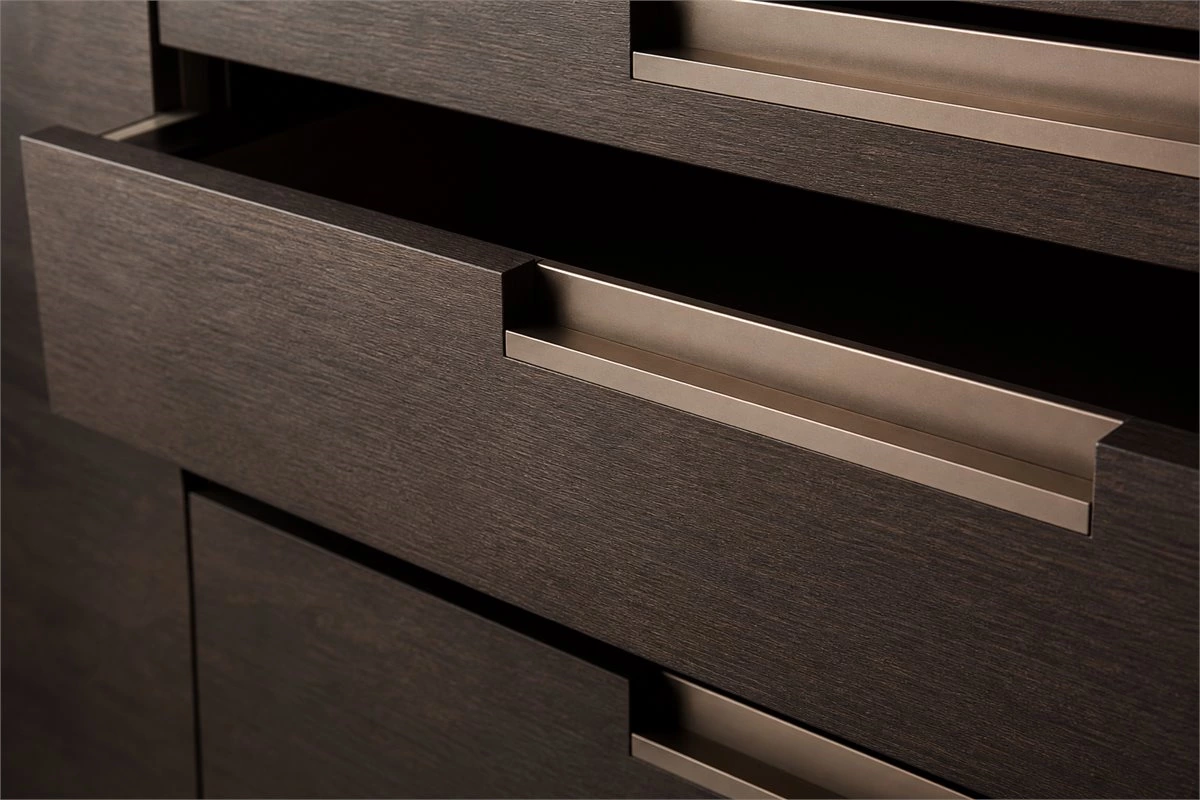
It is another popular handleless system in custom cabinetry that features a recessed space between doors or drawers to accept a rail (usually metallic) and create a gap. The small gap allows you to put your hand behind the door or drawer panel and pull it. They can be customized in various shapes and sizes to suit different design preferences, making them a versatile option for modern spaces.
An inset pull notch, often called a Gola profile in kitchen cabinetry, creates a consistent recessed channel between cabinet fronts. It is a practical choice for contemporary kitchens because the opening area is predictable, easy to grip, and visually clean. Aluminum profiles can be selected in black, champagne, stainless steel, or color-matched finishes to suit the cabinet design.
This system is especially effective for long drawer runs, large pantry doors, and integrated kitchen islands. For a comparison of visible handles and handleless approaches, read our guide to cabinet design flexibility: handle or handleless.
Push-to-Open Cabinet
Push-to-open cabinets are named after the mechanical device installed on the hidden side of the cabinet doors. You can push the doors with little effort to trigger the device that will pop them open. Push-to-Open cabinets offer several advantages, including ease of use, convenience, lower cost, and a clean aesthetic.
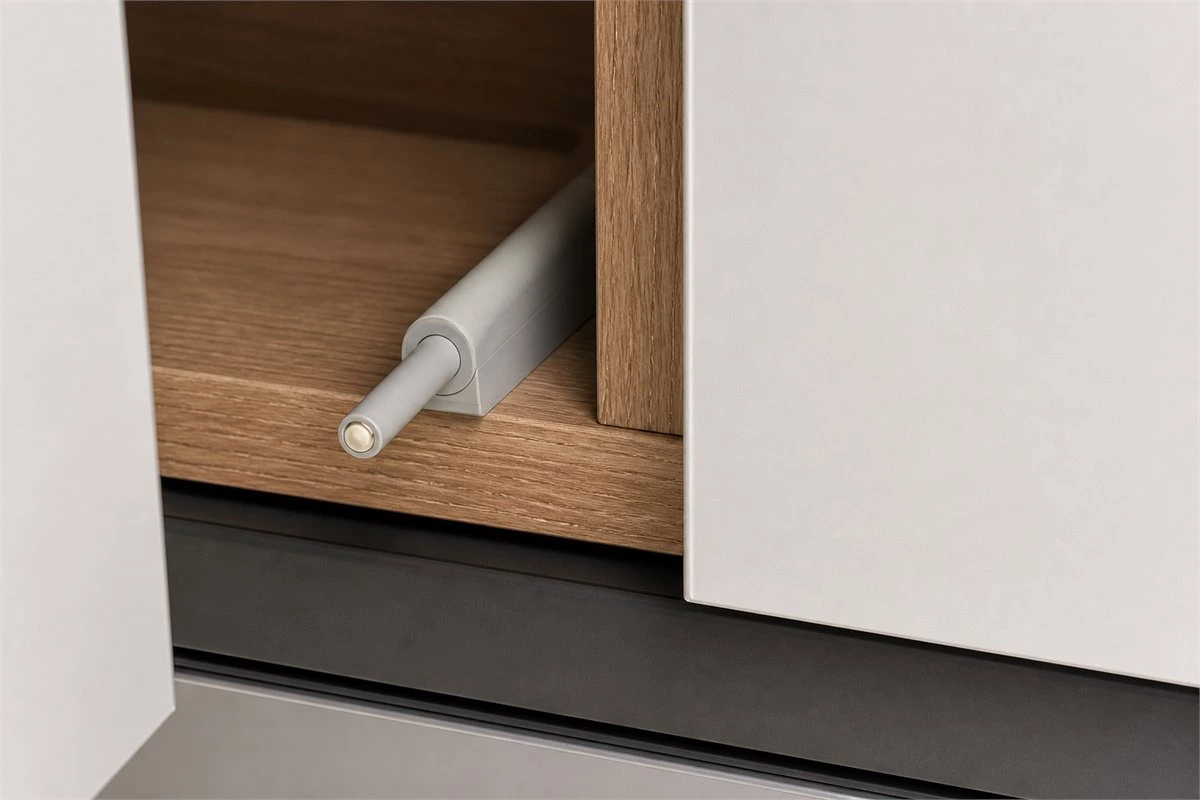
Push-to-open cabinets are ideal for selected upper cabinets, media units, wardrobes, and areas where a completely uninterrupted surface is desired. They can also be convenient when hands are full. However, the mechanism should be selected according to front weight, door size, and hinge configuration so that the cabinet opens reliably and closes neatly.
For kitchen base cabinets that are opened repeatedly, many homeowners prefer a physical recessed pull or profile handle because it gives immediate control and can reduce fingerprints on the front. For technical context on this type of mechanism, see Blum’s official TIP-ON push-to-open guidance.
Practical Details That Make Handleless Cabinets Work Better
Handleless cabinets look best when design details are considered early. Choose durable finishes for high-touch areas, allow consistent gaps around doors and drawers, and include task lighting so profile lines remain visible without making the room feel busy. In kitchens, consider how grease, water, and fingerprints will affect the selected surface and opening method.
Mixing systems can also be practical. For example, a kitchen may use Gola profiles for daily drawers, an integrated pull for tall pantry doors, and push-to-open hardware for selected wall cabinets. This creates an elegant handleless cabinet design while giving every storage zone the opening method it needs.
Conclusion
Allure has been getting on the way of bringing custom cabinets that are thoughtful and inspiring. In addition to the cabinet style, layout, size, and material, we pay more attention to the design details. It’s these creative details that kick things up a notch in a way that’s still subdued and sophisticated, and our work really illustrates that philosophy.
The right handleless cabinet door opening system should feel as good as it looks. Whether you choose a bevelled edge, extended edge, cutout pull, inset notch, or push-to-open mechanism, the best result comes from matching the detail to the room’s function and your daily habits. Explore our key elements of minimalist cabinet design or browse custom kitchen cabinet solutions for more planning inspiration.
FAQs About Handleless Cabinet Door Opening Systems
What is the best handleless cabinet door opening system?
The best option depends on the cabinet location and how often it will be used. Recessed profiles and bevelled edge pulls work well for everyday kitchen drawers, while push-to-open hardware is often suitable for selected doors and upper cabinets.
Are handleless cabinets practical for kitchens?
Yes. Handleless cabinets can be highly practical when the opening method is selected properly. Profile handles, edge pulls, and quality push-to-open hardware provide access while maintaining a clean cabinet elevation.
Do push-to-open cabinets show fingerprints?
Push-to-open cabinet fronts can show fingerprints more easily than cabinets with a pull profile, especially on dark gloss finishes. Matte, textured, or anti-fingerprint surfaces can help reduce visible marks.
What is a Gola profile handle?
A Gola profile is a recessed channel, often made of aluminum, installed between cabinet fronts. It creates a finger space for opening drawers and doors while keeping the cabinet face visually handleless.