As modern lifestyles evolve, so too do the expectations for both the aesthetics and functionality of our living spaces, especially in high-traffic areas like the kitchen. If you're considering a kitchen makeover or simply love keeping up with design trends, join us and let's see what's new for kitchen design in 2025!
While this article captures design directions that were especially visible in 2025, the most useful ideas are not tied to one year. Open planning, flexible islands, concealed storage, accessible cabinetry, natural materials, and thoughtful technology can continue to improve how a kitchen looks and works every day.
When reviewing functional kitchen design trends, focus on the choices that suit your room size, cooking habits, storage needs, and household routine. A successful kitchen should feel personal and current while remaining practical over time.
Open Plan Layout
In recent years, open kitchens have become the go-to choice for many homeowners. This layout transforms the kitchen into a vibrant hub for dining, chatting, and spending quality time, all while staying seamlessly connected to the living or dining areas. It adds depth and visual appeal to the space.
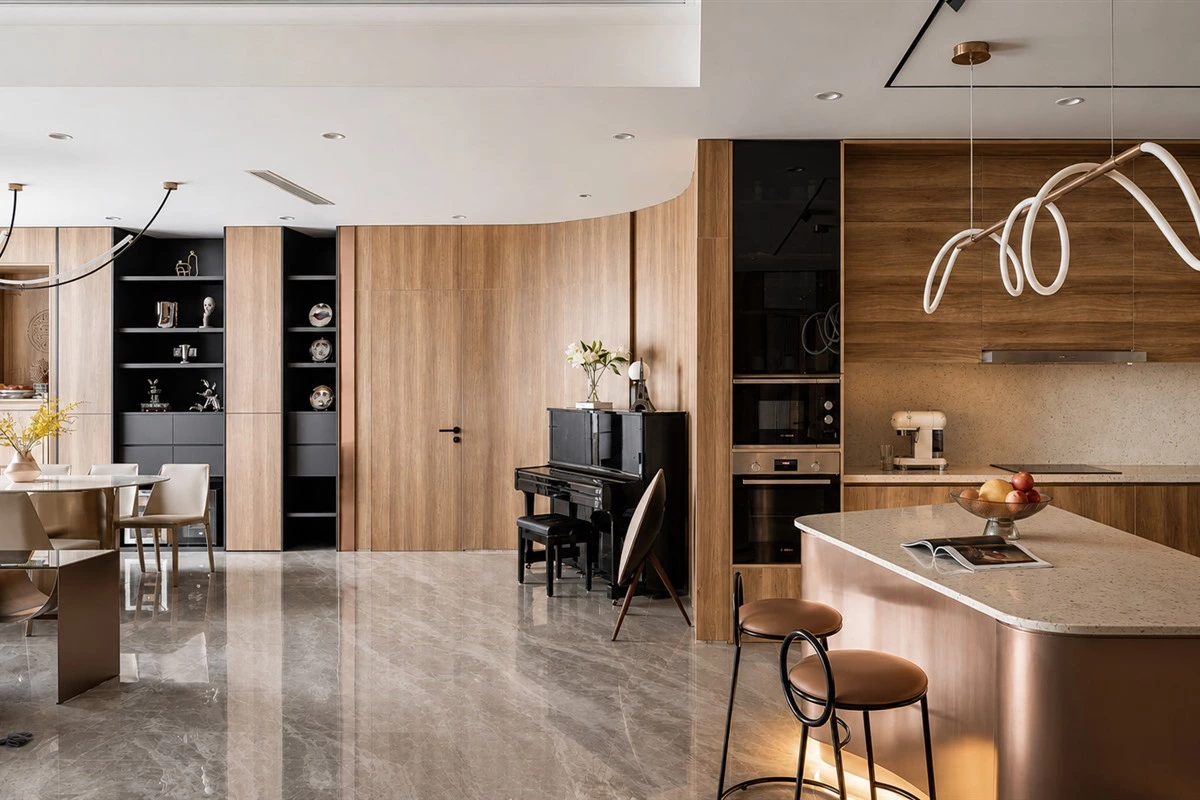
The trend continues into 2025, to reduce walls and partitions to create a harmonious flow between the kitchen, living room, and dining areas. This not only enhances the openness of the living space but also encourages interaction among family members.
An open-plan kitchen works best when circulation, storage, lighting, and cooking ventilation are considered early. The kitchen can remain visually connected to the home while still having clearly defined zones for preparation, dining, and relaxing.
Multi-Functional Kitchen Island
Besides offering extra counter and storage space, kitchen islands are a tried-and-true element that serves as multi-functional hubs where people can gather, dine, and even work. By using consistent flooring materials and color palettes, the kitchen and dining spaces blend together, creating a cohesive and expansive feel.
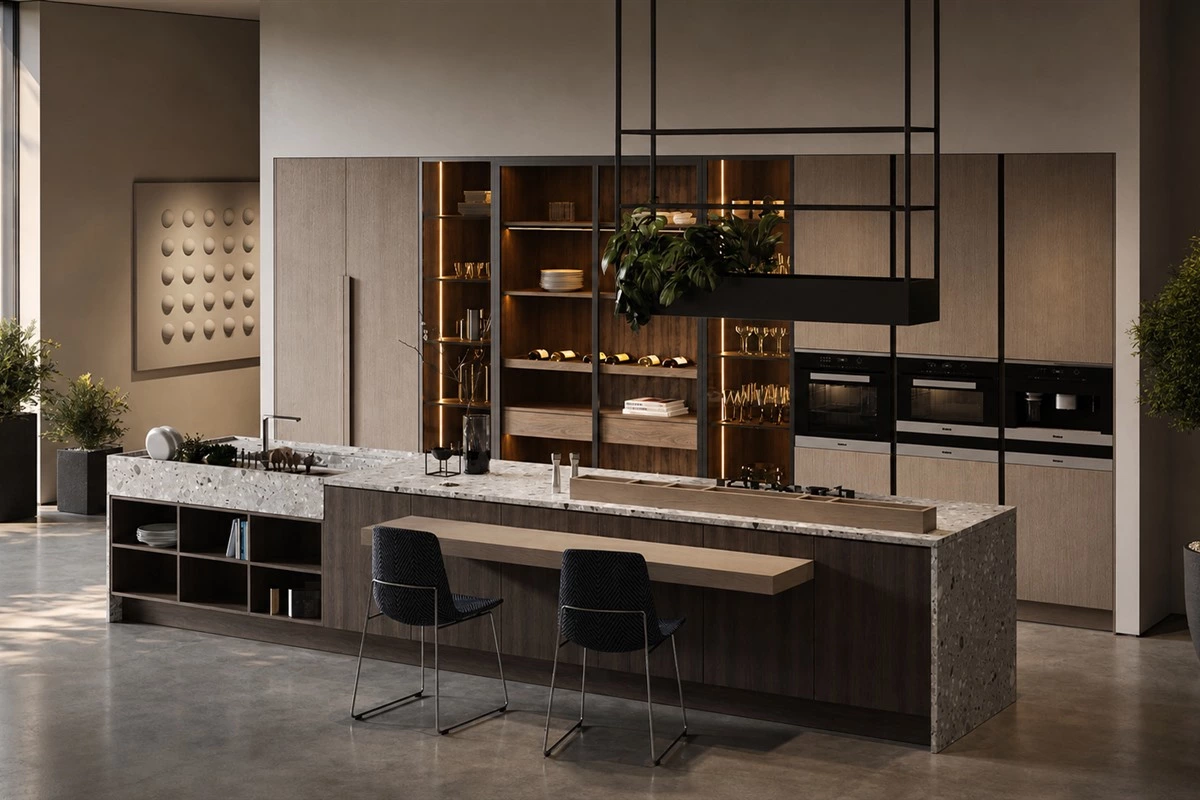
A well-designed island can combine food preparation, storage, seating, power access, and social interaction. Explore our integrated kitchen island ideas for more ways to match an island to your available space and daily routine.
Hidden Storage Solution
Storage optimization is a central focus in modern kitchen design, with intelligent storage solutions maximizing every inch of available space while keeping the kitchen tidy and organized. From smart cabinets to custom drawers, the goal is to make everything "disappear" yet easily accessible. Popular storage features include pull-out cabinets, basket organizers, and dedicated appliance cabinets. Built-in induction cooktops, panelized appliances, and concealed devices behind pocket doors help maintain a streamlined, minimalist look in the kitchen.
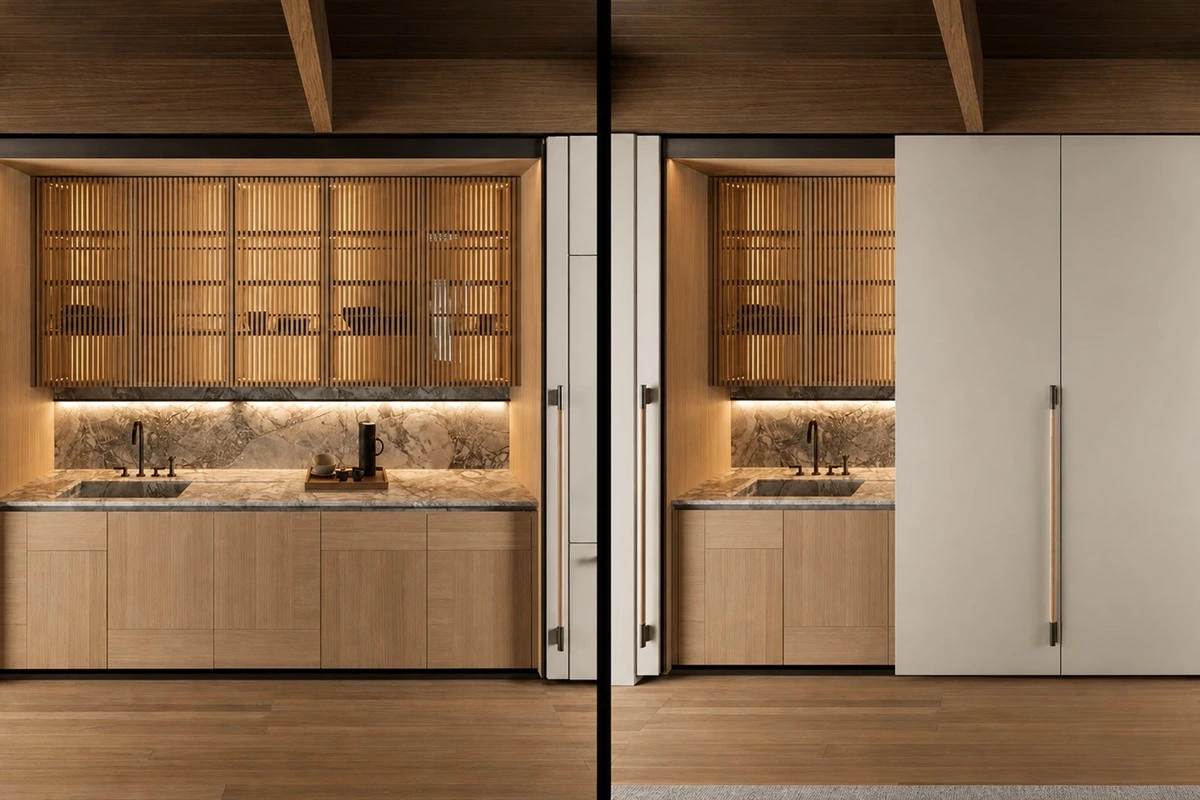
Concealed storage does not mean sacrificing access. The most useful designs bring frequently used items closer through drawers, pull-outs, appliance garages, and internal organizers. For additional inspiration, see these popular hidden kitchen features.
Smart Technology
As artificial intelligence continues to progress, cutting-edge technology and smart home devices are becoming more prevalent in the kitchen. Motion-sensing technology, voice-controlled appliances, and other innovations are transforming the way we cook and manage our kitchens鈥攎aking cooking easier, faster, and even a little fun.
For example, sensor-activated lighting, touchless faucets, and smart cooktops allow you to perform tasks without ever touching a button. Simple gestures or proximity are all it takes to turn on lights or activate appliances, offering both convenience and hygiene.
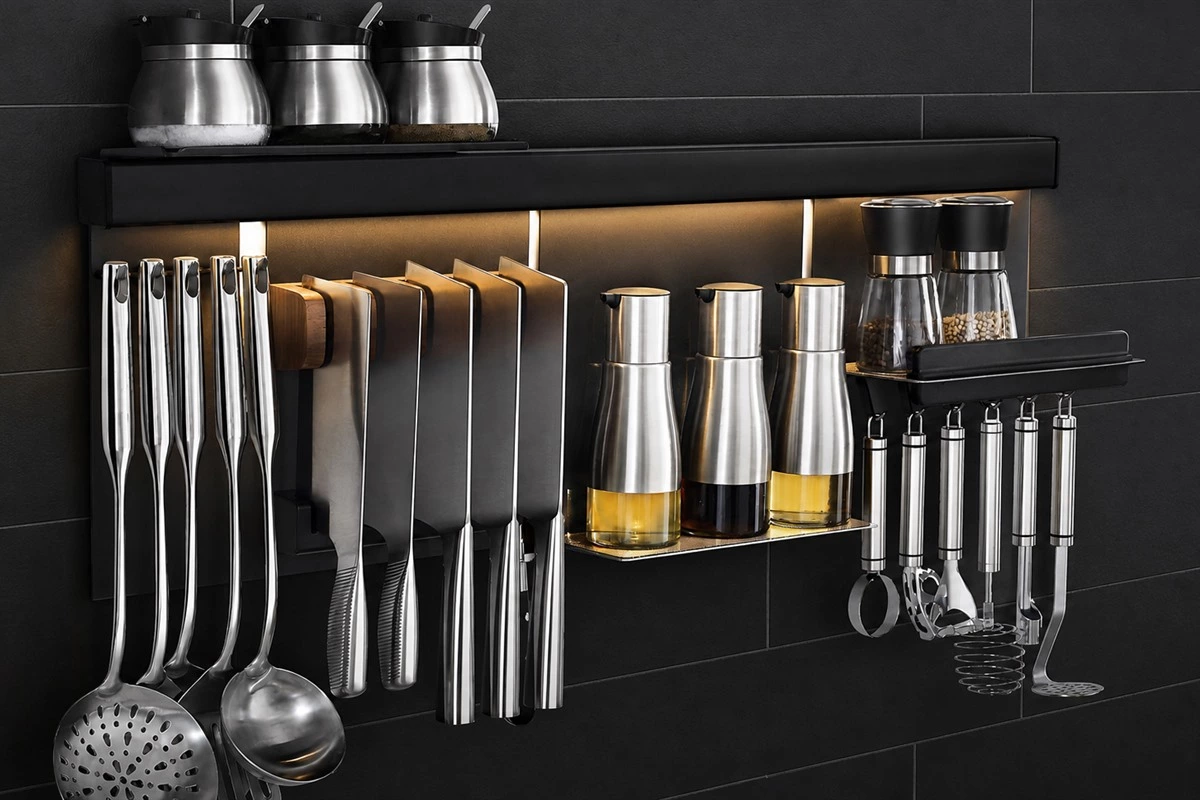
Before selecting smart features, confirm power locations, device compatibility, manual controls, and maintenance requirements. Technology should simplify an everyday task rather than add unnecessary complexity.
Modular Cabinet
Modular cabinetry is a rising trend as it is designed to fit the exact dimensions of a kitchen and tailored to individual habits. These customizable systems allow for the incorporation of various drawer sizes to store utensils, cookware, and small appliances. Internal dividers help keep everything neatly organized鈥攌nives, spoons, forks, and other kitchen tools all have their designated places, making them easy to access when needed.
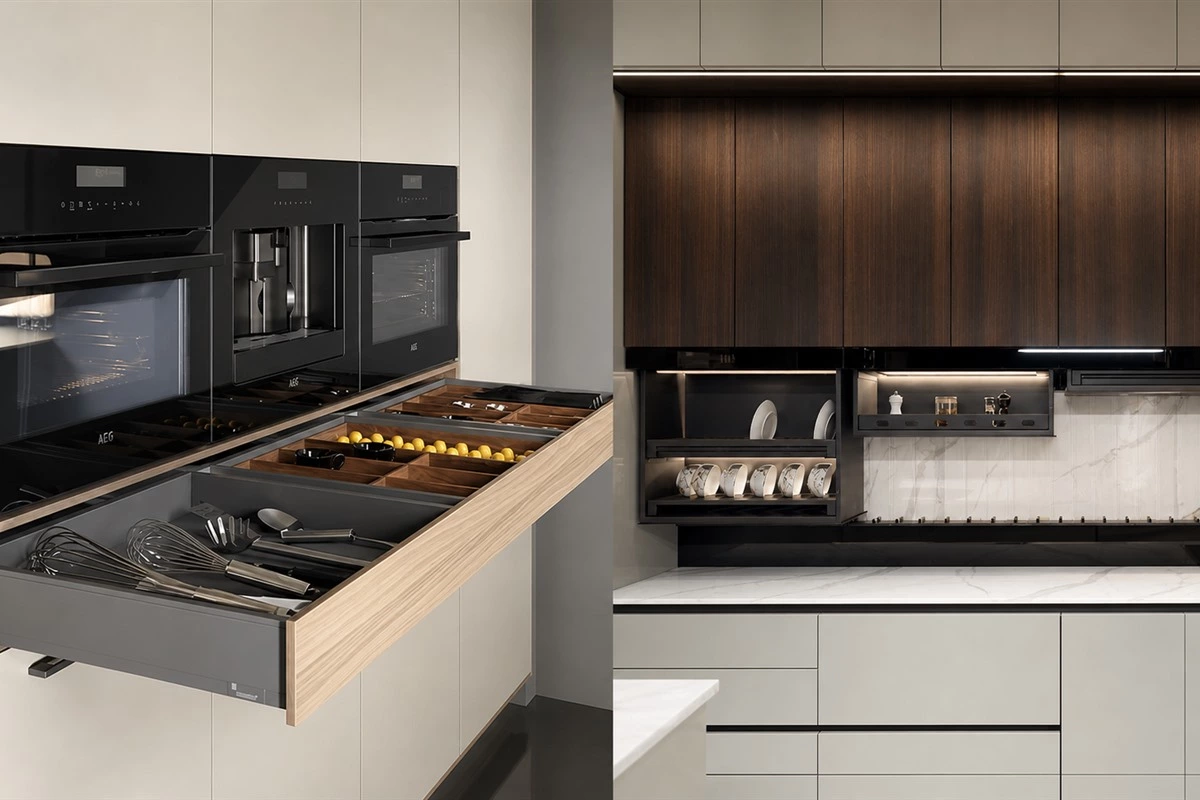
Lift-up wall cabinets are another innovation, designed to accommodate users of different heights. With a gentle pull, these cabinets lower to a more accessible height, eliminating the need for a ladder or tiptoeing to reach items stored high above.
Modular storage is most effective when it is planned around the items you actually use: cookware near the cooking zone, tableware near dining, and pantry items near preparation areas. This creates a more efficient kitchen workflow.
Natural Material and Earthy Tone
Inspired by nature, kitchens in 2025 are embracing warm earthy tones and organic materials. Oak, walnut, and other wood finishes, combined with natural stone like marble or quartz, bring texture and warmth to the space. The mix of stone and wood creates a harmonious balance, adding character and life to the kitchen while offering endless design possibilities.
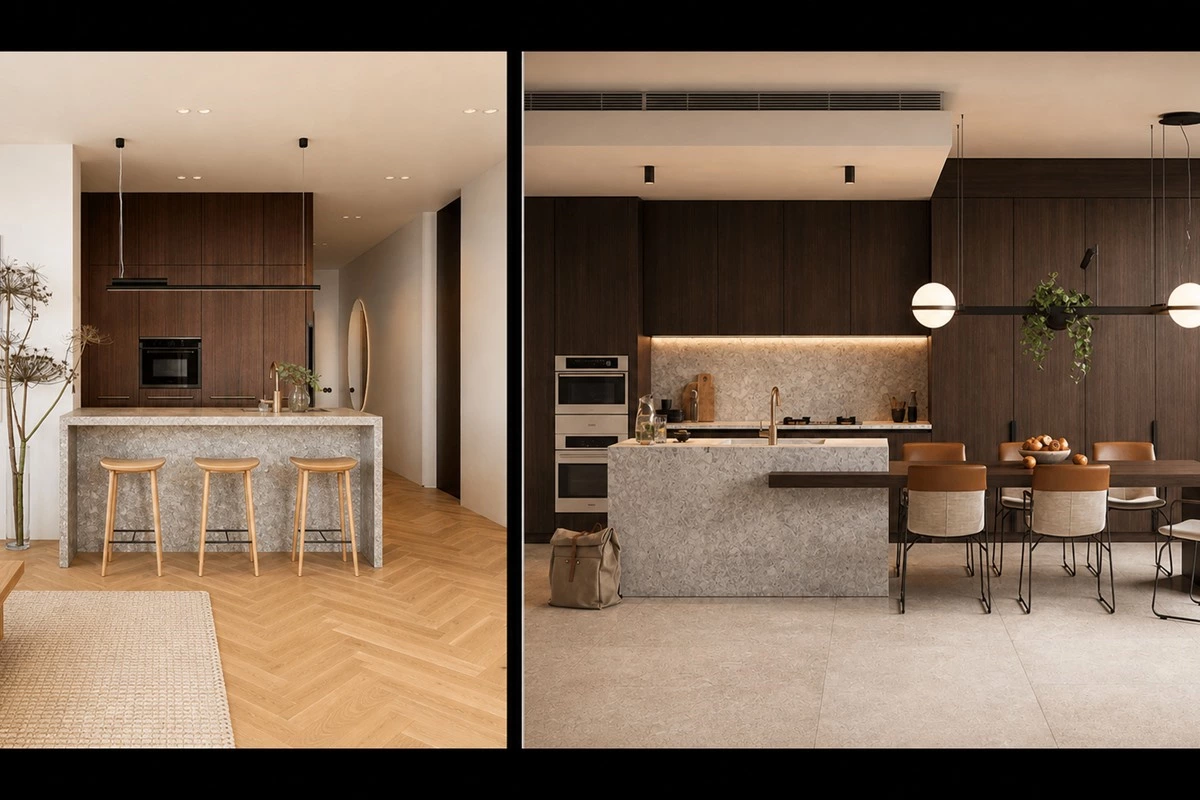
Earthy colors and natural surfaces can make a modern kitchen feel calmer and more welcoming. See our modern earth-toned interior ideas for more ways to layer wood, stone, warm neutrals, and soft contrasting shades.
Bold Color
2025 kitchen designs are embracing more vibrant, bold colors to express a sense of style and energy, meeting the aesthetic desires of younger homeowners. While adding color to kitchen cabinets has traditionally been limited to islands or accent cabinets, now, deeper, more dramatic hues like navy blue, forest green, and other bold shades are becoming popular choices for cabinet finishes, doors, and even countertops. These colors add personality, depth, and a touch of modern flair to the kitchen.
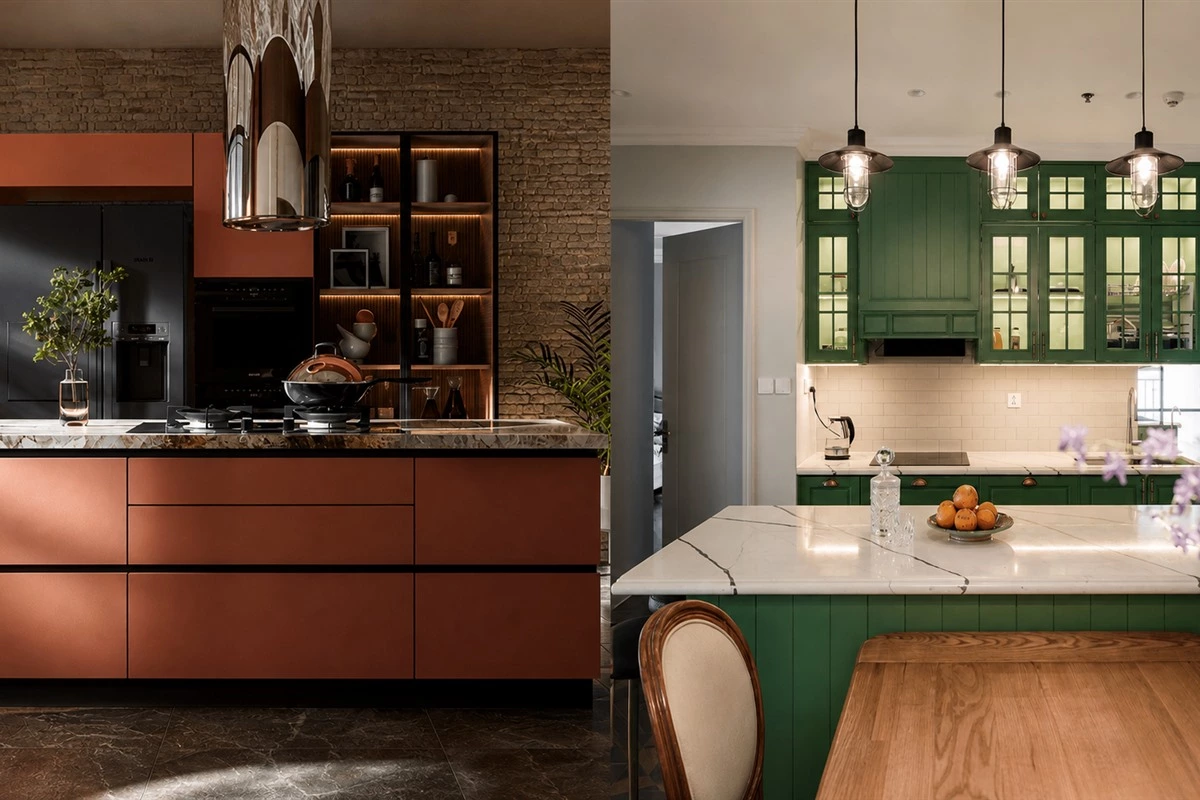
Bold cabinet colors are often easiest to balance with light walls, natural wood, warm metal hardware, or quieter countertops. You can also use a stronger tone on an island or a single cabinet run if you prefer a more measured statement.
How to Apply These Functional Kitchen Design Trends
- Prioritize workflow: Plan a comfortable relationship between storage, preparation, cooking, cleaning, and dining zones.
- Choose storage before finishes: Decide what needs to be stored and accessed daily before selecting decorative details.
- Use technology with purpose: Add smart fixtures or appliances only where they improve convenience, accessibility, or energy management.
- Balance visual weight: Pair dark or bold cabinets with sufficient lighting and lighter surrounding surfaces.
- Design for long-term use: Select materials, hardware, and layouts that remain comfortable to clean and use over time.
For broader kitchen planning resources and industry guidance, visit the National Kitchen & Bath Association.
Frequently Asked Questions
What makes a kitchen design functional?
A functional kitchen supports clear movement, accessible storage, adequate work surfaces, suitable lighting, and practical placement of appliances and daily-use items.
Are open-plan kitchens still practical?
Yes. An open-plan kitchen can be practical when cooking ventilation, storage, traffic flow, lighting, and visual organization are planned carefully.
What should a multifunctional kitchen island include?
Depending on the space, an island may include preparation space, drawers, seating, outlets, a sink, a cooktop, open shelving, or a lower dining surface.
How can hidden storage improve a kitchen?
Hidden storage can reduce visual clutter while keeping appliances, pantry goods, cookware, and cleaning supplies organized and easier to access.
Are smart kitchen features necessary?
They are optional. The best smart features solve a real daily need, such as better lighting control, touchless operation, easier access, or safer cooking.
Do earthy tones work in modern kitchens?
Yes. Oak, walnut, beige, warm grey, stone, and soft green can add warmth and texture while still supporting a clean, modern kitchen design.
Final Thoughts
The most lasting kitchen trends are the ones that improve daily living. Open layouts, adaptable islands, concealed organization, accessible cabinetry, natural materials, and considered color choices can all create a kitchen that feels welcoming, useful, and visually balanced long after a particular trend cycle has passed.